




Faceless videos—content that doesn’t rely on on-camera talent—are a fast-growing format on social platforms. Paired with AI voiceovers and curated stock footage, creators can produce polished, on-brand content more quickly and cheaply. This article covers core benefits, how to pick tools and clips, practical best practices, and scaling tactics to boost engagement without sacrificing quality.
Recent studies show faceless marketing can shape brand perception and build meaningful emotional connections with audiences.
Faceless Marketing Strategies for Digital Brand Building
This study examines faceless marketing — campaigns that avoid identifiable spokespeople or celebrities — and its effects on brand perception and purchase intent among young urban consumers. The authors find perceived authenticity and visible content effort predict stronger brand perception, while emotional connection is a key driver of purchase intention. The paper suggests brands can generate trust and emotional response through well-crafted, non-human digital content; marketers should focus on high-quality creative and authentic narratives when using faceless approaches. What’s in a face? Exploring the democratisation of brand building through faceless marketing strategies, S Gopakumar, 2025
What Are the Key Benefits of Using AI Voiceovers in Faceless Videos?
AI voiceovers offer practical and creative gains that raise production value for faceless content.
- Natural Sounding Voiceovers: Modern synthesis delivers tones and inflections that feel human, helping viewers connect.
- Customization Options: Tailor voice characteristics to match brand personality and maintain consistency.
- Efficiency in Production: Generate high-quality audio quickly, avoiding the time and cost of hiring talent.
AI narration is a scalable option for creators producing faceless videos that need to engage and convert.
How Does AI Voice Synthesis Improve Video Personalization and Engagement?
Voice synthesis lets creators match tone, pacing, and style to their audience, making content feel more relevant and boosting attention and emotional resonance.
In What Ways Does Automated Voiceover Software Increase Production Efficiency?
Automated voice tools produce broadcast-ready audio in minutes and reduce scheduling, studio, and editing overhead. That frees teams to focus on visuals and storytelling and lowers per-video costs for batch production.
Other research shows integrated AI pipelines can dramatically shorten production time while keeping visual quality intact.
AI-Driven Video Generation with Natural Voice Synthesis
This paper describes an integrated AI pipeline that automates avatar video creation by combining facial animation (SadTalker), neural TTS (Google Cloud Neural2 with SSML), and optimized video processing (FFmpeg). The workflow supports three phases: (1) batch processing for scalable multi-avatar output, (2) interactive single-video creation with natural voice synthesis, and (3) quality enhancement through intelligent upscaling. Experimental results report a 90% reduction in production time (from 2+ hours to 15–25 minutes per 2-minute video) while retaining roughly 50–60% visual quality via full-frame preprocessing that preserves backgrounds and avatar context. Automated Avatar Video Generation for Scalable Educational Content: Integration of AI-Driven Animation and Natural Voice Synthesis, 2025
How to Choose the Right Stock Footage Platforms for Faceless Video Creation?

Choose platforms with quality libraries, reliable search, and clear commercial licenses so your final videos look professional and stay legally safe.
- Quality of Footage: Prefer high-resolution clips so finished videos appear crisp and polished.
- Licensing and Copyright: Confirm commercial license terms to avoid legal issues when publishing or monetizing.
- User Experience: An intuitive search and download flow saves time and eases iteration.
Evaluate platforms against these criteria to find the best fit for your creative and business needs.
What Criteria Should You Use to Select Quality Stock Footage for Video Marketing?
Focus on relevance, technical quality, and variety when choosing clips.
- Relevance to Video Theme: Select footage that reinforces the message and narrative.
- Visual Appeal and Quality: Well-composed, well-lit clips keep viewers engaged and look professional.
- Diversity of Clips: A broad selection gives flexibility to pace and layer visuals.
These criteria help stock choices support the story you want to tell.
How Does Stock Footage Integration Enhance Visual Appeal in Faceless Videos?
Thoughtful stock footage breaks monotony and gives narration context. The right clips illustrate points, add motion and emotion, and make the video easier to follow while reinforcing the script.
Strategically chosen stock footage is known to make reports and content more engaging and provides quick access to needed visuals.
Enhancing Visuals with Stock Footage
Stock footage is used to make reports and stories more visually appealing and entertaining, and because it can be searched and selected quickly, it helps producers add necessary visuals on tight timelines. Archive video footage in news: creating a likeness and index of the phenomenal world, 2006
What Are the Best Practices for Combining AI Voiceovers and Stock Footage in Faceless Video Production?
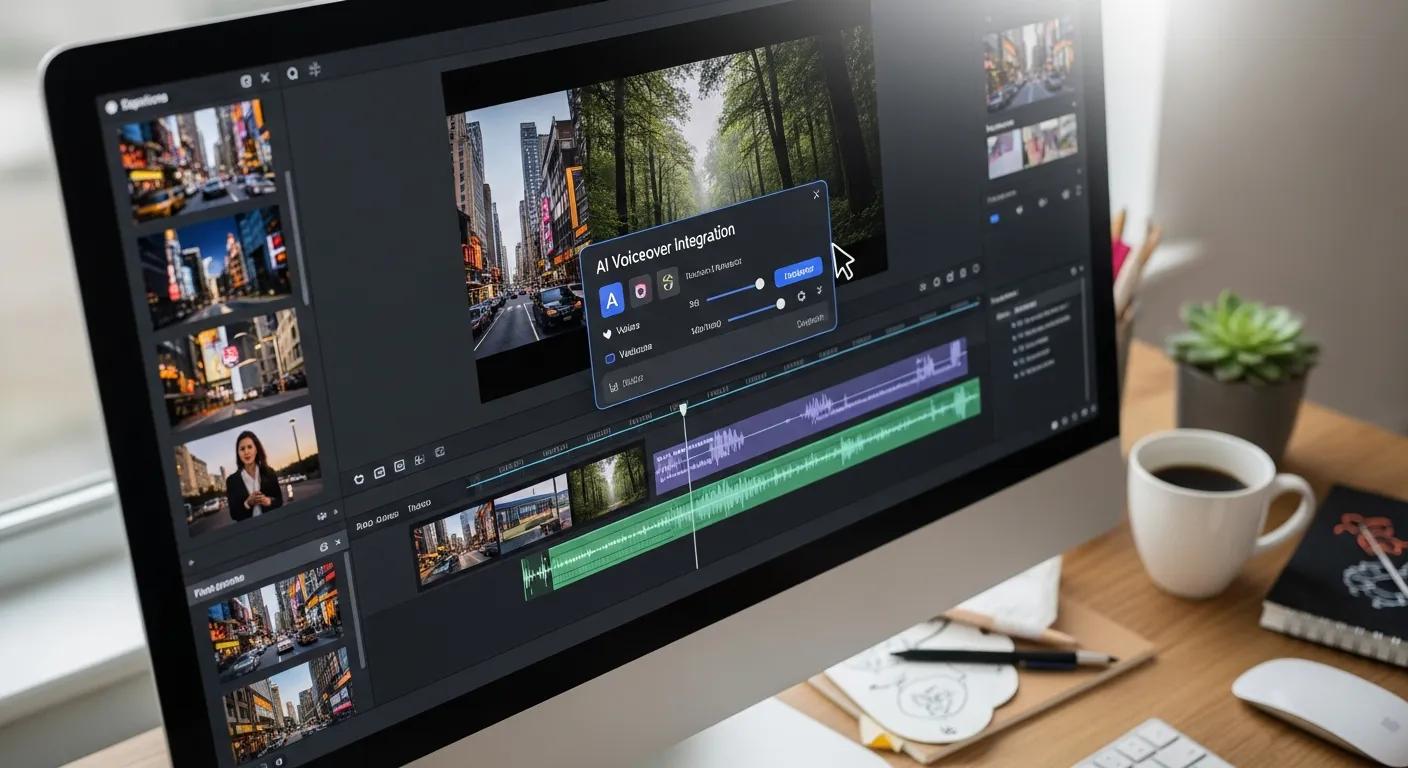
Pair AI narration with clips intentionally so both elements support the message and viewing experience.
- Clear Narration: Use an easy-to-understand voice and pace lines to match visuals.
- Script Optimization: Write with natural cadence and visual cues to smooth transitions.
- Consistent Branding: Keep tone, vocabulary, and visual style aligned across videos.
Following these guidelines produces cohesive, professional-feeling content.
How Can Automated Voiceover Software and Stock Footage Streamline Social Media Video Tools?
Combined, automated voice tools and stock libraries speed the pipeline from concept to publish, letting teams produce higher-quality social videos with less manual overhead and iterate faster on messaging and distribution.
What Step-by-Step Methods Optimize Faceless Video Production Using AI Narration?
A concise workflow keeps production efficient and repeatable:
- Script Development: Draft a clear script linking main points to visual ideas.
- Voiceover Generation: Produce the narration, testing tone and pacing.
- Footage Selection: Choose clips that illustrate key moments.
- Editing and Integration: Sync voice and footage with attention to timing and transitions.
Repeatable steps help teams scale without sacrificing quality.
How Can Faceless Videos with AI Voiceovers and Stock Footage Scale Social Media Campaigns?
Faceless videos using AI narration and stock footage make it easier to increase output while maintaining consistent quality, expanding reach and engagement across platforms.
- Strong Thumbnails and Captions: Eye-catching thumbnails and concise captions drive clicks and set expectations.
- Targeted Hashtags: Relevant tags improve discoverability and attract the right audience.
- Analytics Tracking: Measure performance to refine creative choices and distribution.
These tactics amplify your faceless video strategy and support steady audience growth.
What Role Does Video Content Scalability Play in Lead Generation?
Scalability matters because consistent, quality content increases opportunities to reach and convert potential customers. A steady stream of relevant videos keeps your brand visible and nurtures awareness over time.
How Do AI Video Narration and Stock Footage Support Bulk Video Creation?
AI narration and large stock libraries enable practical batch production: generate multiple voiceovers and swap clips from a broad library to produce series of videos with a consistent look and voice—ideal for scaling content marketing.
Frequently Asked Questions
What types of AI voiceover technologies are available for faceless video production?
Neural text-to-speech (TTS) systems produce natural-sounding voices. Major services provide customizable voices, accents, and SSML controls to fine-tune delivery.
How can I ensure the quality of stock footage I select for my videos?
Use reputable libraries, preview clips, check resolution and frame rates, and confirm licensing for commercial use before downloading.
What are the common mistakes to avoid when using AI voiceovers in videos?
Avoid skipping script refinement, mismatching voice tone to content, and over-processing audio. Test voices and read scripts aloud to catch awkward phrasing.
How can I measure the effectiveness of my faceless videos on social media?
Track views, watch time, engagement, click-through rates, and conversions. Use platform analytics to guide creative and distribution decisions.
What are some creative ways to use stock footage in faceless videos?
Visualize abstract points, add atmosphere, or use layered B-roll for texture. Smooth transitions and thematic clips help pace and mood.
Can AI voiceovers be used in multiple languages for global audiences?
Yes—many TTS platforms support multiple languages and accents. Localize phrasing and tone to match cultural nuance and preserve clarity. For more information, visit syllaby.
Conclusion
AI voiceovers combined with smart stock footage selection let creators produce engaging, on-brand faceless videos quickly and at scale. Apply clear scripts, match voice and visuals, and follow repeatable workflows to sharpen social media output. Start testing tools and processes that fit your brand, then iterate to improve production and reach.