



Your brand voice is the pattern that turns words into identity — the choice of words, the tempo, and the tone that make your communications unmistakably you. Getting AI-generated video scripts to match that voice is deliberate work: you need clear inputs, iterative checks, and measurable signals. This guide lays out a hands-on workflow for defining voice parameters, feeding them to AI script generators, and validating outputs with practical KPIs so your videos consistently sound like your brand. You’ll learn why voice matters for recognition and conversion, how to operationalize voice with prompts, voice cloning, and avatars, and which semantic and measurement techniques produce repeatable results. Each section gives actionable steps, sample prompt templates, side-by-side prompt-to-output examples, and checklists you can use right away to keep scripts on-brand across channels.
Why Brand Voice Matters for AI-Generated Video Scripts
Brand voice makes your messages recognizable, credible, and memorable. When AI scripts adopt a consistent vocabulary, sentence length, and emotional tone, viewers form stronger associations between the content and your brand — which boosts engagement and conversion. In contrast, voice drift fragments perception and lowers recall, especially when you scale production without controls. Defining voice up front acts as a filter for AI outputs so models produce cleaner drafts that need fewer edits and stay true across campaigns. Below we break down the specific benefits that justify a short investment in a voice brief before you produce assets.
Key Benefits of Keeping Brand Voice Consistent
Consistent voice delivers measurable marketing gains and operational savings that build over time. It raises brand recognition and recall — which tends to improve click-through and conversion rates as audiences learn to trust your messaging. It also shrinks revision cycles because scripts require fewer rewrites, cutting production time and cost per asset. Over the long run, a unified voice deepens customer relationships by setting reliable expectations and emotional cues across touchpoints. Those advantages make a strong case for documenting voice and building simple automated checks before you scale AI-generated video production.
How Brand Voice Affects Engagement in AI Videos
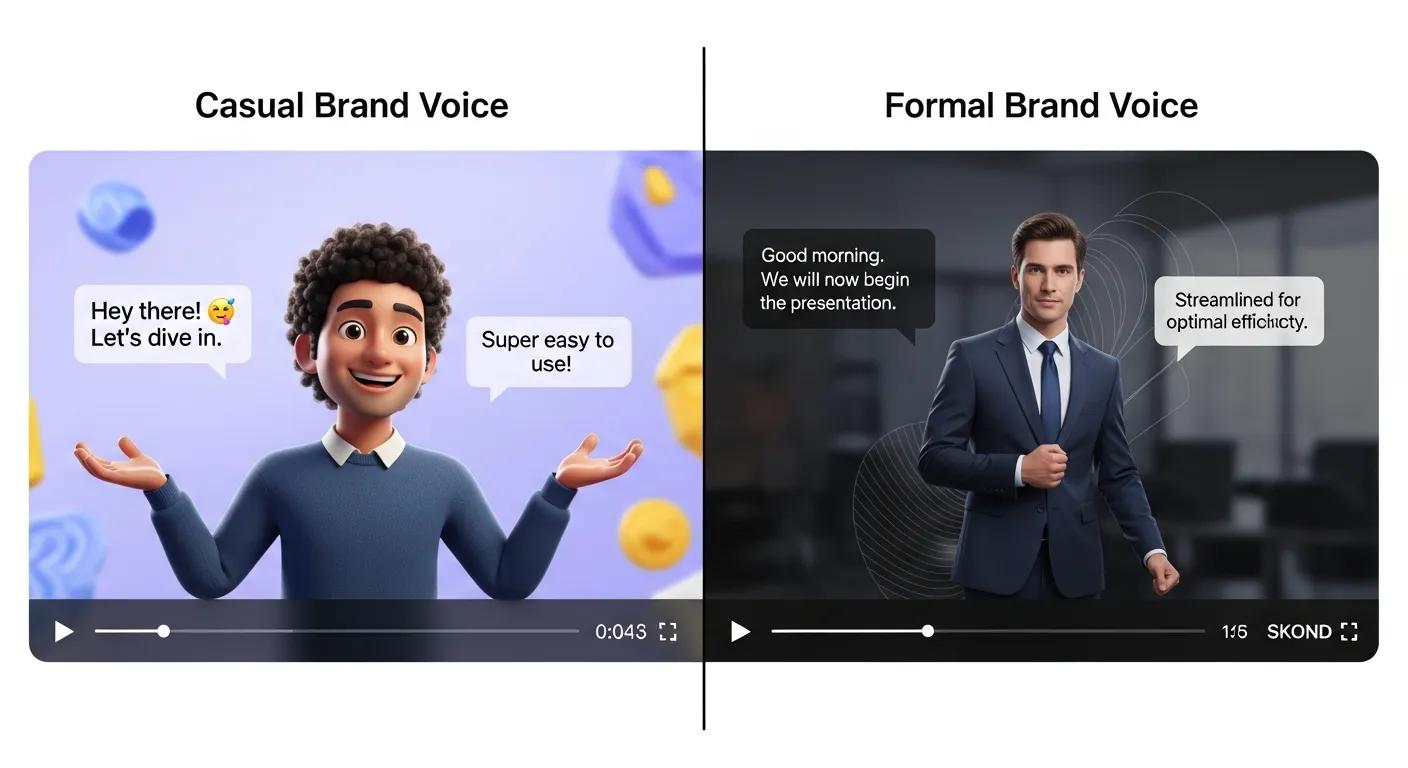
Voice shapes engagement by changing emotional cues, perceived credibility, and viewer cognitive load — all of which influence retention and actions. A conversational, casual voice often improves watch-through rates on short social clips by feeling more relatable; an authoritative, concise voice can increase trust for explainers and enterprise content. Vocabulary, sentence length, and cadence affect pacing and attention: short sentences speed comprehension, while well-placed adjectives and pauses encourage reflection. When you match voice to audience segments, relevance rises and so do KPIs like watch time and conversions. The next section explains how platform features make that matching practical.
How Syllaby Helps You Put Brand Voice into AI Video Scripts
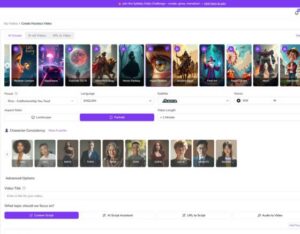
Syllaby is built to turn voice inputs into scalable script outputs using AI Script Generation, AI Voice Cloning, and AI Avatars — so your narrative and vocal identity stay consistent across videos. The script editor provides structured prompt fields (brand attributes, prohibited terms, audience) that steer tone and vocabulary automatically. Voice cloning delivers repeatable narrations that preserve pace, pitch, and emotional range so the spoken delivery mirrors the written tone. Avatars and faceless video options keep visuals aligned. Together these features shorten iteration cycles, helping teams move from brief to publish-ready faster while protecting brand integrity.
We bring together AI tools for video creation and social publishing so teams can produce and distribute consistent content without rebuilding processes each time.
Syllaby’s AI Script Generation provides industry-ready templates and audience-optimized scripts; AI Voice Cloning captures a consistent vocal signature; and AI Avatars lock in visual character. Combined, these capabilities create an operational workflow for teams to generate, review, and publish brand-aligned videos more efficiently.
What AI Script Generation Does for Brand Voice
AI Script Generation converts your brand brief into draft copy using template scaffolds, prompt-engineered instructions, and style rules that enforce vocabulary and sentence patterns. You supply attributes — like , , or — plus examples and anti-examples, and the generator returns variants you can preview, edit, and A/B test. Strong prompts include the target audience, the CTA’s tone (direct or soft), and prohibited words to avoid off-brand language. This controlled approach reduces misalignment and creates multiple usable drafts quickly so you can iterate until the voice fits.
Brand voice evolution in multimedia depends on both communication strategy and tech capabilities — and AI is now a central enabler in that mix.
The Role of AI in Evolving Brand VoiceAcross Multimedia Platforms
Digital automation and AI have reshaped how organizations communicate with audiences across multimedia channels. This paper reviews how AI tools influence brand voice, explores their interdependencies, and highlights gaps in earlier research. The study concludes that AI significantly contributes to the development, prediction, and analysis of brand voice across formats, shaping the modern lifecycle of brand communication.
The role of artificial intelligence in the evolution of brand voice in multimedia, J Surikova, 2022
How AI Voice Cloning Keeps Your Vocal Identity Stable
AI Voice Cloning captures a narrator profile — pitch, pace, warmth, and emotional range — and applies it across scripts so the spoken delivery reinforces the written voice. Typical steps include recording sample audio, tuning the model for pace and emotion, and setting parameters for pitch and breathiness to fit different content types. Legal and consent safeguards are essential when cloning human voices; document permissions and usage policies before you deploy. With a refined cloned voice, narration becomes a durable component of your brand identity, reducing variation from multiple voice actors or inconsistent recordings.
Step-by-Step: Tailoring AI Video Scripts to Your Brand
This section gives an ordered, repeatable workflow that links a brand brief to script outputs, voice cloning, avatar selection, and measurement so teams can reliably reproduce brand-aligned videos. Start by defining voice parameters and examples, build prompt templates and generate initial drafts, iterate in the editor, refine or select a cloned voice, and choose avatars or faceless assets to match visuals. Finish with A/B tests and KPI checks to verify alignment and improve prompts. Below are checklist-style steps you can use immediately.
- Create a one-page voice brief with core attributes, on-brand examples, and anti-examples.
- Build prompt templates that include audience, goal, tone, and banned words.
- Generate several script variants, then edit and pick finalists for voice cloning.
- Clone or pick a narrator profile and align pacing to script cadence.
- Choose avatars or faceless templates that match brand colors and motion style.
- Run A/B tests and measure engagement, watch time, and sentiment.
Doing this readies teams for scale and ensures scripts arrive aligned before you layer in voice or visuals. Once the workflow is stable, use integrations to automate iteration and publishing.
How to Define Brand Voice Parameters for AI
Keep your brand-voice brief short and precise: list tone descriptors, preferred vocabulary, target sentence length, persona archetype, and explicit “do not say” items to prevent drift. Add concrete examples and anti-examples — one-line script snippets that show on-brand and off-brand phrasing — so the AI has clear anchors. If you serve multiple segments, include audience variants (e.g., casual for Gen Z, formal for enterprise). Finish with measurable rules like “use contractions” or “limit sentences to 14 words” so qualitative guidance becomes prompt-friendly constraints. That brief becomes your single source for prompt engineering and quality checks.
Working effectively with generative AI, especially LLMs, requires a deliberate approach to prompt design and iteration.
Prompt Engineering for Generative AI: Customizing Outputs and Interactions
With rapid advances in conversational AI and large language models, prompt engineering is now a core skill for getting reliable outputs. The paper covers how example order, automatic instruction generation, and selection strategies affect model performance. It shows that optimized prompts — sometimes generated automatically — can outperform basic baselines, turning prompt design into a practical engineering discipline for shaping LLM behavior.
Prompt engineering for generative AI, 2024
Using Syllaby’s AI Script Editor to Lock in Tone
The script editor offers structured fields and style controls — paste your voice brief attributes, pick industry presets, and use sliders for formality, humor, and length to guide generation. Use regenerate and variant features to create alternatives quickly, then edit in place and save winning versions as templates. A/B testing tools let you publish two variants and compare performance; version history helps you track which prompt changes led to gains. Repeat the cycle — generate, edit, test, measure — to tighten alignment over time.
Below is a prompt-to-output comparison that shows how a single tone field changes both wording and downstream effects, helping teams choose precise prompt language.
| Brand Tone Input | Prompt Template Example | Sample Script Output / Effect |
|---|---|---|
| Friendly, playful | “Write a 30s social hook, friendly, casual, use contractions” | Conversational opener, quick CTA, higher social shares |
| Formal, authoritative | “Write a 45s explainer, formal, data-driven, no slang” | Structured arguments, credibility cues, stronger trust metrics |
| Empathetic, reassuring | “Write a 20s support message, calm, warm, empathic” | Soothing pacing, better customer retention |
Explicit tone fields in prompts shape both phrasing and engagement outcomes. Standardize these fields across creators to cut revision cycles and speed approvals.
We package AI-powered script templates, voice pipelines, and avatar presets so teams move from brief to published video faster while protecting brand voice.
How Avatars and Faceless Videos Reinforce Visual Identity
Avatars and faceless templates translate voice into visuals by aligning clothing, movement, and visual pacing with the script’s tone. Map avatar choices to brand attributes — professional attire and restrained motion for authoritative brands, bright styling and expressive gestures for playful brands. Faceless videos (text overlays, product B-roll, animated icons) work well when voice and copy carry the personality while visuals keep to brand colors, fonts, and iconography. When visuals and voice match, viewers experience a coherent message and retention improves. The next section shows semantic techniques that anchor voice in the script itself.
Optimize AI Scripts for Semantic Brand Voice Alignment
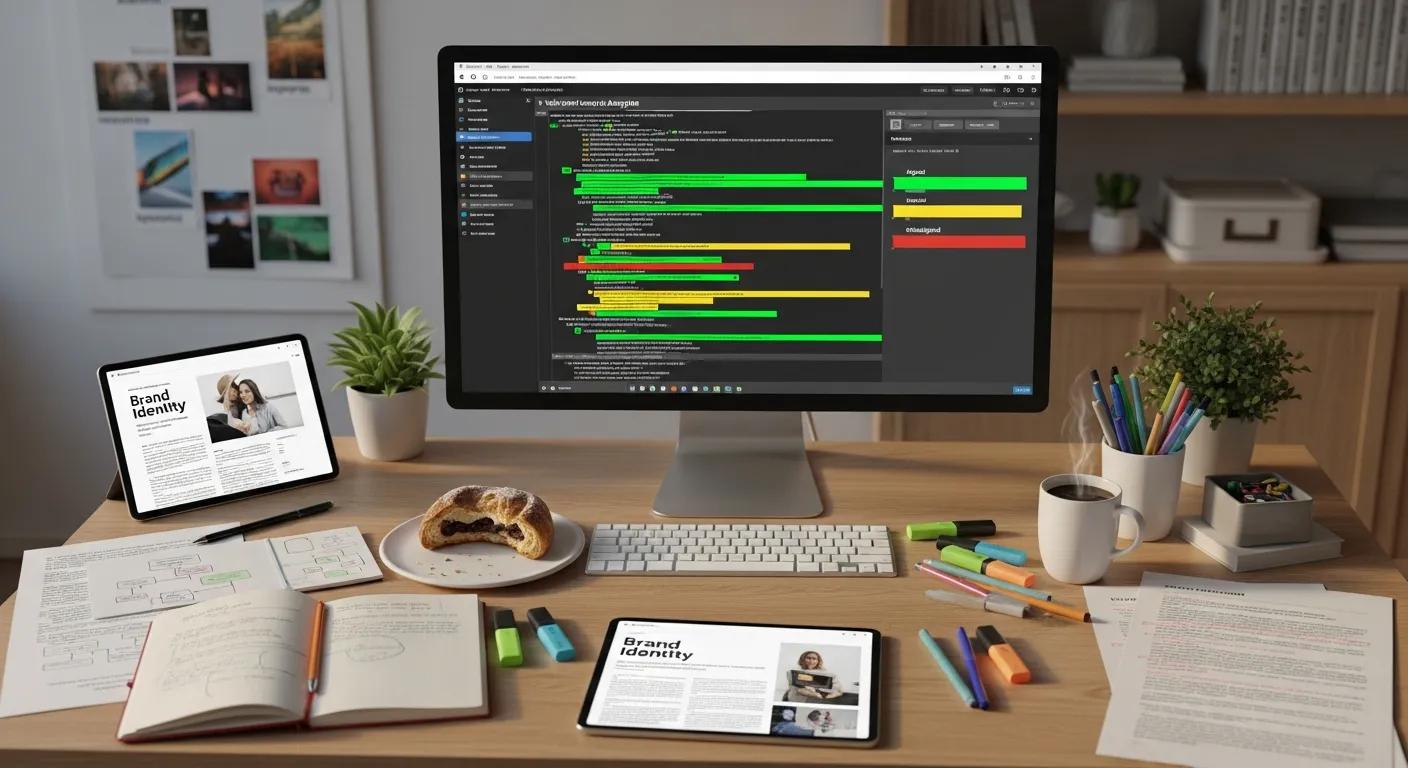
Semantic optimization makes scripts not just sound on-brand but use consistent lexicon, entity mentions, and structure so both audiences and models interpret voice the same way. Use targeted keyword sets tied to brand attributes, place core terms early in the script to anchor meaning, and follow a reliable structure — hook, value, proof, CTA — that reflects your formality level. Semantic structure reduces ambiguity for the AI, yielding predictable tone and vocabulary. Below are keyword mappings and structural tactics you can apply right away.
Keywords and Phrases That Reinforce Brand Voice
Choose keywords that embody your personality and list words to avoid so the AI doesn’t drift. For a friendly brand, favor approachable verbs, contractions, and colloquial turns; for an authoritative brand, prefer technical nouns, decisive verbs, and evidence markers. Create three buckets — Primary (brand terms), Supportive (tone words), and Avoid (conflicting jargon) — and feed them into prompts so the generator prioritizes them. Naturally embedding these terms in hooks and CTAs increases memorability and helps semantic models associate your content with brand attributes.
| Brand Attribute | Semantic Element | Example Phrases / Keywords |
|---|---|---|
| Friendly | Tone markers | “Hey there”, “let’s”, “you’ll love” |
| Authoritative | Proof words | “research shows”, “data-driven”, “certified” |
| Playful | Vocabulary | “discover”, “spark”, “surprise” |
Use these buckets in prompt fields to lock in lexicon and avoid mixed signals in generated scripts.
Why Semantic Structure Improves Messaging
Semantic structure — the order of ideas, how evidence appears, and where the CTA sits — shapes clarity and intent, which are central to voice consistency. Use a default template like Hook → Value → Proof → CTA and tweak sentence complexity and word choice to change formality. For short social clips, prioritize a sharp hook and quick CTA; for B2B explainers, allocate space to proof and use formal connectors. Consistent structure reduces viewer cognitive load, boosts memorability, and makes automated tone scoring more reliable. Next we cover how to measure and monitor this alignment.
Measure and Track Brand Voice Consistency in AI Scripts
Measuring voice consistency starts with a baseline and a few repeatable KPIs — engagement, retention, sentiment, and brand recall — that link creative quality to business outcomes. Establish a baseline by analyzing transcripts from on-brand videos with tone tools and measuring watch time and CTR. Then compare new AI-generated variants against that baseline, tracking improvements or regressions with sentiment and keyword-usage metrics. A regular reporting cadence (weekly or per campaign) and an A/B testing framework let teams iterate based on data rather than guesswork. Below are clear KPIs and example targets.
KPI Signals of Successful Voice Alignment
Track these KPIs to see if scripts are resonating and staying on-brand. Engagement metrics (CTR, likes) and average watch time show initial resonance. Sentiment analysis on transcripts and comments reveals tonal perception, while brand recall surveys measure longer-term recognition. Production metrics — edit time per script and number of regeneration cycles — quantify operational gains from stricter prompts and cloned voices. Together these metrics give both creative and operational views of alignment.
- Engagement (CTR, likes): immediate audience response and interest.
- Retention (average watch time, completion rate): how well the script holds attention.
- Sentiment score (NLP on transcripts/comments): perceived tone and emotional fit.
- Production efficiency (edit time, variants needed): time/cost savings from better prompts.
Use these KPIs together — no single metric tells the whole story.
| CTR | Click-through rate on video thumbnails | +15% vs. baseline for targeted campaigns |
|---|---|---|
| Average Watch Time | Mean viewer watch duration | 20–30% improvement for refined scripts |
| Sentiment Score | NLP-derived tone alignment with brand brief | Maintain ≥ 0.75 alignment score |
| Edit Time | Hours per final script | Reduce by 30% after prompt standardization |
Tracking these metrics across cohorts and over time shows whether voice guidelines and prompt updates are producing measurable gains. The next section covers tools to automate monitoring.
Tools That Help Monitor Voice Consistency
Combine analytics platforms, transcript-based NLP tools, and A/B testing frameworks to validate voice alignment and iterate. Analytics capture engagement and retention; NLP tone tools evaluate transcript language and sentiment; experiment platforms run controlled tests between script or voice variants. Pull these signals into a dashboard for weekly visibility and set pass/fail thresholds for automated gating. Focusing on tool categories rather than single vendors keeps your stack adaptable as capabilities evolve.
Real-World Examples of Successful AI Script Customization
Examples show how a clear brief, AI generation, voice cloning, and avatar selection together deliver measurable gains. One ecommerce team that adopted a concise, playful voice brief sped up approvals and raised social CTR by standardizing prompts and using a cloned voice for demos. An educational publisher that prioritized proof and data saw longer watch times on explainers after reordering scripts to surface evidence earlier. These cases prove process and tooling matter — not AI alone.
Research also shows AI-driven personalization of brand voice can improve engagement and strengthen brand identity.
AI-Driven Personalization of Brand Voicefor Enhanced Customer Engagement
This study examines how AI personalizes brand voice to create emotionally resonant, human-like interactions. It reviews NLP, sentiment analysis, and machine learning applications — from chatbots to recommendation engines — and finds growing evidence that AI tools can improve customer experience and brand loyalty when applied thoughtfully.
AI-Driven Personalization Of Brand Voice: Enhancing Customer Engagement And Brand Identity, S Bali, 2025
How Businesses Use Syllaby to Tailor AI Scripts
Teams use Syllaby to centralize voice assets — saved voice briefs, prompt templates, cloned narrator profiles, and avatar presets — so content remains consistent across campaigns. A common workflow: upload a brand brief, generate multiple script variants with AI Script Generation, pick a cloned voice or avatar, and run an editorial review checking semantic and KPI alignment. That consolidated process reduces cross-team friction, shortens timelines, and preserves guidelines through automation. Many teams report fewer revision cycles after standardizing prompts and templates on the platform.
Quantifiable Outcomes of Brand-Aligned AI Videos
Measured improvements usually show up as higher engagement and operational efficiency: improved CTRs and longer watch times for on-brand scripts, and less production time when templates and cloned voices are used. Typical outcomes we’ve seen include a 15–30% increase in average watch time for refined scripts and a 20–40% reduction in editing time after prompt standardization. Those gains combine creative upside with measurable cost savings, making a strong case for a voice-first AI process.
If you want to put these improvements into practice, a subscription to a platform that blends AI Script Generation, AI Voice Cloning, and AI Avatars streamlines the workflow from brief to publish while preserving brand voice.
| Use Case | Implementation | Example Outcome |
|---|---|---|
| Social Ads | Prompt templates + cloned voice | +20% CTR, faster approvals |
| Product Explainers | Semantic structuring + avatar | +25% watch time, higher demo conversions |
| Support Messages | Empathetic voice clone + faceless video | Improved sentiment scores, reduced support escalations |
These patterns show how aligning script, audio, and visuals yields both engagement and efficiency gains. Apply the workflows and semantic mappings in this guide to replicate similar improvements for your brand.
Frequently Asked Questions
How can businesses ensure their AI-generated scripts remain on-brand?
Start with a short, actionable brand voice brief that lists tone, vocabulary, and style rules. Regularly refine the prompts you use and run A/B tests to compare script variants. Create a feedback loop so team members can flag off-brand drafts, and track KPIs like engagement and sentiment to surface issues early. Together, these controls keep AI outputs aligned with your identity.
What strategies refine AI-generated scripts after the first draft?
Use collaborative editing sessions to align tone and content, leverage the editor to generate variants and make in-place edits, and rely on A/B testing to see what performs. Feed audience feedback and performance metrics back into prompt design so revisions are grounded in data rather than opinion.
What content types work best for AI-generated video scripts?
AI scripts shine for scalable, repeatable formats: product explainers, social ads, how-tos, and support messages. These formats benefit from fast iteration and consistent voice across many assets. Highly nuanced storytelling or content requiring deep creative insight may still need more human-led writing and oversight.
How can audience insights improve AI-generated scripts?
Pull engagement metrics, comments, and sentiment data from past videos to see what resonates. Use surveys or small focus groups for qualitative input, then bake those learnings into your voice brief and prompts. Continuous iteration based on real audience feedback refines both voice and performance.
What risks come from relying only on AI for script generation?
Relying solely on AI can lead to tone drift, lack of nuance, and homogenized content that feels generic. Without human checks, AI may miss brand subtleties or produce inappropriate phrasing. Mitigate these risks by combining AI speed with human review, clear voice briefs, and automated gating rules.
How do businesses fold AI-generated scripts into a wider content strategy?
Align AI outputs with broader marketing goals and existing brand messaging. Define when to use AI — for volume work, templates, or ideation — and when human creativity is mandatory. Measure scripts against KPIs and foster collaboration between creators and AI tools so automation supports, rather than replaces, your creative process.
Conclusion
Tailoring AI-generated video scripts to your brand voice boosts both engagement and efficiency. With a small investment in voice briefs, prompt templates, and the right tools, teams can produce consistent, on-brand videos at scale. Use structured workflows and platforms like Syllaby to connect brief to publish, measure impact with KPIs, and tighten voice over time. Start small, iterate quickly, and let your voice guide the AI — that’s how you unlock reliable, brand-aligned video content.