





An AI video ads generator improves A/B testing by letting marketers produce dozens of ad variations in minutes instead of weeks, so tests launch faster, cover more creative angles, and reveal winning ads before budgets run dry. Instead of betting an entire campaign on one expensive production, teams can test ten different hooks, voiceovers, and visual styles side by side and let real audience data pick the winner. That single shift, from guessing to measuring, is why so many marketing teams now treat AI-generated video as the engine behind their testing programs.
Think about the last video ad your team produced the traditional way. There was a script approval round, a shoot day, an editing cycle, and probably a few revision loops. By the time the final cut went live, you had one version. One. If it flopped, you had no backup and no data explaining why. This article breaks down exactly how AI-generated video changes that equation, what to test first, and how to build a repeatable testing workflow that keeps improving your results month after month.
What Is an AI Video Ads Generator and How Does It Work?
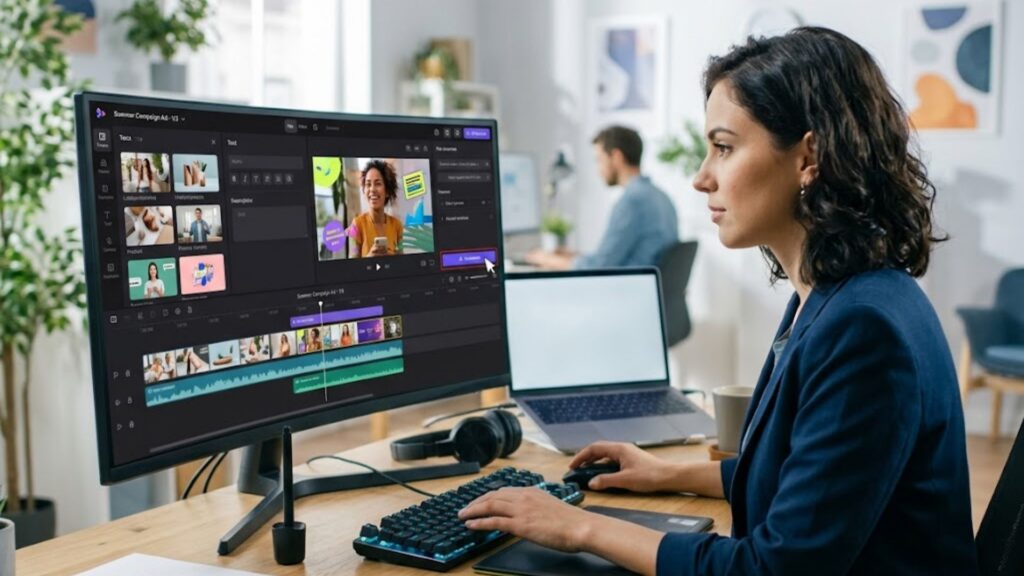
An AI video ads generator is a software tool that turns a text prompt, a script, a product link, or a set of images into a finished video ad, complete with visuals, voiceover, captions, music, and on-screen text. The technology combines several systems working together: language models write and refine scripts, text-to-speech engines produce natural-sounding narration, and video generation models assemble scenes, transitions, and motion graphics into a ready-to-publish file.
The workflow is simple on the surface. You describe the product or paste a landing page URL, choose a style and format, and the tool builds the ad. Behind the scenes, the software handles tasks that used to require a full production team:
- Scriptwriting: Drafting hooks, body copy, and calls to action based on your product details
- Voiceover: Generating narration in different voices, tones, and languages
- Visual assembly: Matching stock footage, product shots, avatars, or animated scenes to each line of the script
- Formatting: Exporting vertical, square, and widescreen versions for Instagram Reels, TikTok, YouTube, and Facebook feeds
- Captioning: Adding subtitles automatically, which matters because most social video is watched with sound off
The real value for testing shows up in the “regenerate” button. Once the first version exists, producing a second, fifth, or twentieth variation takes minutes. Change the opening line, swap the presenter, adjust the pacing, or rewrite the call to action, and you have a fresh creative ready for a head-to-head comparison. That speed is what makes rigorous experimentation practical for teams of any size.
Why Does Traditional Video Ad Testing Slow Marketers Down?

Classic split testing is a sound method with a painful bottleneck: producing enough versions to test. Comparing two ads tells you which one performed better, but it rarely tells you why, and producing even those two versions the old way could eat a month of calendar time and a large chunk of budget.
Here is what that bottleneck typically looks like in practice:
- Production cost: A single professionally shot video ad can cost thousands of dollars, so testing five concepts means five separate budgets
- Turnaround time: Scripting, filming, and editing stretch across weeks, and audience trends can shift before the ad even launches
- Limited sample of ideas: When each version is expensive, teams only test their “safest” ideas and never discover the unexpected angles that often win
- Creative fatigue: Audiences tune out repeated ads quickly, and slow production means you cannot refresh creatives fast enough to keep performance stable
- Incomplete learning: With only two versions in play, you cannot isolate whether the hook, the visuals, or the offer drove the difference
Creative fatigue deserves special attention. Ad platforms reward freshness, and click-through rates decline as the same audience sees the same video again and again. Teams that cannot replace tired creatives quickly end up paying more for worse results. The fix is not working harder inside the old process. The fix is a process where new versions cost almost nothing to produce.
How AI Ad Variations Change the Math of Split Testing
AI ad variations flip the economics of experimentation. When a new version takes five minutes instead of five weeks, testing stops being an occasional event and becomes a continuous habit. That changes marketing split testing in three fundamental ways.
First, you can test breadth. Instead of choosing between two competing ideas in a planning meeting, you produce both, plus eight more, and let the audience vote with their attention. The winning concept is often one the team would never have prioritized on instinct, which is exactly the point. Data surfaces surprises that opinions suppress.
Second, you can test depth. Once a concept wins, you can generate variations of that winner: same script with a different opening line, same visuals with a different voiceover, same structure with a shorter runtime. Each round of refinement compounds on the last, so performance improves in steady increments rather than random jumps.
Third, you can test continuously. Because fresh creatives are always available, you never have to choose between “keep running the fatigued ad” and “go dark while production catches up.” A steady pipeline of new versions keeps campaigns learning and keeps costs per result from creeping upward.
Teams using platforms like Syllaby AI build this pipeline directly into their weekly routine, generating a batch of new video versions every Monday, launching them midweek, and reviewing performance data by Friday. The tool handles production volume so the team can focus on reading results and forming the next round of ideas.
The Core Ways AI Improves A/B Testing for Marketing Campaigns

The benefits go beyond raw production speed. Modern tools improve nearly every stage of the testing cycle, from idea to analysis. Here are the improvements that matter most.
Faster Iteration Cycles
Speed is the foundation everything else rests on. A test that takes a month to set up delivers roughly twelve learning cycles per year. A test that takes a day delivers hundreds. Since every cycle teaches you something about your audience, the team that iterates faster simply learns faster, and that learning gap widens every quarter. Marketers who once shipped one campaign refresh per quarter now refresh weekly without adding headcount.
Testing One Variable at a Time, at Scale
Good experiments isolate a single variable. If two ads differ in hook, footage, music, and length all at once, you cannot say which change caused the performance gap. AI generation makes clean isolation easy because you can regenerate an ad while holding everything else constant:
- Same video, three different opening hooks
- Same script, two different voice styles
- Same structure, with and without on-screen price
- Same message, delivered by different presenter styles
This controlled approach turns fuzzy hunches into clear answers. You learn, with evidence, that a question-based hook beats a statistic-based hook for your audience, and that lesson carries into every future campaign.
Predictive Scoring Before You Spend
Several AI systems now analyze a video before it launches and estimate how it will perform, based on patterns learned from millions of past ads. These scores flag weak openings, cluttered visuals, or buried calls to action while the ad is still a draft. Predictive scoring does not replace live testing, but it filters out likely losers so your ad budget concentrates on candidates with genuine potential.
Smarter Budget Allocation During the Test
Ad platforms like Meta and TikTok already use machine learning to shift spend toward better-performing versions while a test runs. Feeding those systems a larger, more diverse set of creatives gives their optimization algorithms more to work with. Ten meaningfully different videos give the algorithm ten paths to explore, and it will find pockets of audience response that a two-version test would never reveal.
Lower Cost Per Learning
Perhaps the most underrated benefit: the cost of being wrong collapses. When a failed ad represents weeks of production budget, failure hurts and teams grow cautious. When a failed ad represents a few minutes of generation time, failure is just cheap information. Bold ideas get tested instead of shelved, and the occasional breakout winner more than pays for every experiment that fell flat.
Different sectors feel these gains differently. Real estate teams test neighborhood-specific hooks, ecommerce brands test product angles, and coaches test testimonial styles, which is why exploring how video testing applies across industries helps teams borrow proven tactics from adjacent fields instead of starting from zero.
What Elements of a Video Ad Should You Test First?
Not all variables carry equal weight. Some changes move results dramatically while others barely register. The table below ranks the most common test variables by their typical impact, so you can sequence your experiments where they matter most.
| Test Variable | Typical Impact | What to Compare | Best Metric to Watch |
| Opening hook (first 3 seconds) | Very high | Question vs. bold claim vs. problem statement | 3-second view rate, hook rate |
| Call to action | High | “Shop now” vs. “Learn more” vs. urgency-based | Click-through rate |
| Video length | High | 15s vs. 30s vs. 60s cuts | Completion rate, cost per result |
| Presenter or voice style | Medium-high | Energetic vs. calm, male vs. female voice | Watch time, engagement |
| Visual style | Medium | Live footage vs. animation vs. avatar-led | Click-through rate |
| Music and pacing | Medium | Fast cuts vs. relaxed pacing | Completion rate |
| Captions and text overlays | Medium | Minimal text vs. bold subtitles | Sound-off watch time |
| Offer framing | High | Discount vs. free trial vs. bonus | Conversion rate |
Start at the top. The opening hook determines whether anyone sees the rest of your ad at all, so a hook improvement lifts every downstream metric at once. Only after you have a proven hook should you move down the list to calls to action, length, and style.
The script deserves its own testing track because wording changes are the cheapest to produce and often the most powerful. Teams that use an AI script generator built for video creators can spin up five distinct openings for the same product in a single sitting, then let the audience decide which framing earns the click. Over a few rounds, you build a documented library of hooks that reliably work for your specific market.
A Practical Workflow for Marketing Split Testing with AI
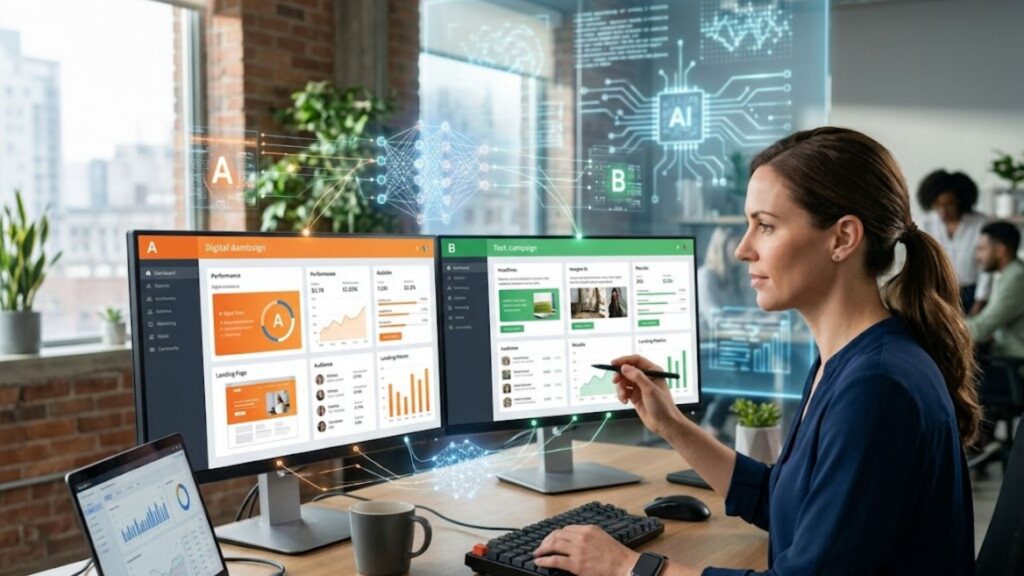
Knowing the benefits is one thing. Running a disciplined program is another. Here is a straightforward weekly workflow that small teams can sustain without dedicated analysts.
Step 1: Define One Question Per Test
Every test should answer a single, specific question. “Does a customer-testimonial opening beat a product-demo opening for cold audiences?” is a good question. “Which ad is better?” is not, because the answer teaches you nothing you can reuse. Write the question down before you generate anything.
Step 2: Generate a Controlled Batch
Produce 4 to 8 versions that differ only in the variable you are testing. Keep the audience, budget, placement, and schedule identical across all versions so the creative is the only difference. Modern generation tools make this the fastest step of the entire process.
Step 3: Launch With Equal Footing
Use the ad platform’s built-in experiment feature rather than simply running versions side by side, because formal experiments split audiences cleanly and prevent overlap from contaminating your results. Give each version enough budget to gather meaningful data, typically enough impressions that random noise cannot masquerade as a trend.
Step 4: Let the Test Reach a Real Conclusion
Resist the urge to call a winner after one strong afternoon. Early results swing wildly, and a version that leads on day one frequently loses by day five. Most video tests need at least 3 to 7 days and a few thousand impressions per version before the ranking stabilizes.
Step 5: Document the Lesson, Then Test the Next Layer
Record what won, what lost, and by how much. Then take the winning version and make it the control for your next experiment, this time varying a different element. Each cycle stacks a proven improvement on top of the last one, which is how strong campaigns are actually built: not in one stroke of genius, but in a dozen small verified wins.
Budget planning gets easier once this rhythm is established, because creative production becomes a predictable line item instead of a lumpy surprise. Reviewing the plans and pricing that fit your testing volume upfront lets you match your subscription to the number of versions your program actually needs each month, whether that is a handful of tests or a full always-on pipeline.
Video Ad Optimization Across Different Platforms

Video ad optimization is not one-size-fits-all, because each platform rewards different behavior. A version that dominates on TikTok can underperform on YouTube, so smart teams run platform-specific tests rather than assuming one winner travels everywhere.
- Facebook and Instagram: Feeds move fast and sound is often off, so test caption-heavy versions and square or vertical formats. Meta’s experiment tools make clean creative comparisons easy to set up.
- TikTok: Native-feeling content wins. Test casual, creator-style versions against polished productions, and pay close attention to the first second, not just the first three.
- YouTube: Skippable formats mean the five-second mark is everything. Test how quickly your brand and value proposition appear, and compare 15-second bumpers against 30-second stories.
- LinkedIn: Professional context changes what resonates. Test authority-driven openings and data-backed claims against emotional appeals.
Presenter style is a platform-sensitive variable worth isolating on its own. Some audiences respond to a face on camera while others engage more with voiceover-driven storytelling, and the answer varies by channel and niche. Generating faceless video versions alongside presenter-led versions lets you test that dimension directly instead of guessing, which is especially useful for brands without an on-camera spokesperson or for topics where the message matters more than the messenger.
Aspect ratio and length round out the platform picture. The same core creative should exist as a 9:16 vertical cut for Reels and TikTok, a 16:9 cut for YouTube, and a 1:1 cut for feeds, and AI tools produce all three from one source in minutes. Treat each format as its own test cell, because completion rates differ sharply between a full-screen vertical experience and an in-feed square.
Common Mistakes That Undermine AI-Powered Ad Testing
The technology removes production bottlenecks, but it cannot protect you from flawed test design. Avoid these frequent traps:
- Changing multiple variables at once: If the hook, footage, and offer all differ, the result is unreadable. One variable per test, always.
- Ending tests too early: Day-one leaders often fade. Wait for enough impressions before declaring a winner.
- Testing trivial differences: Two nearly identical videos will produce nearly identical results. Make variations meaningfully distinct or skip the test.
- Ignoring the follow-through: A video that wins on clicks but loses on conversions may be attracting the wrong audience. Track results all the way to the sale.
- Skipping documentation: Undocumented lessons get relearned, painfully, six months later. Keep a simple log of every test and outcome.
- Publishing generic output: AI drafts are starting points. Winning versions almost always carry a layer of human judgment: sharper wording, a stronger claim, a brand-specific detail no template would know.
The last point matters most. The best-performing teams treat AI as a production multiplier, not a replacement for strategy. Humans decide what to test and why. The software makes the testing physically possible at a scale humans could never produce alone. Teams that want guidance setting up that division of labor can reach out to the Syllaby AI team to talk through how a structured creative testing program would look for their specific channel mix and goals.
Frequently Asked Questions
Can AI create video ads automatically?
Yes. Modern tools generate complete video ads, including the script, voiceover, visuals, captions, and music, from a short text prompt or a product link. Most marketers then apply light edits to sharpen the message and match brand voice before launching. The full process typically takes minutes rather than the days or weeks traditional production requires.
How many ad variations should I test at once?
For most budgets, 4 to 8 versions per test is the practical sweet spot. Fewer than four limits what you can learn, while more than eight spreads budget so thin that no single version gathers enough data to prove anything. Larger advertisers with substantial daily spend can test more versions simultaneously because each one still receives meaningful traffic.
How long should an A/B test run for video ads?
Plan for at least 3 to 7 days per test. Shorter windows are vulnerable to day-of-week effects and random swings, and platform delivery algorithms need a learning period before results stabilize. The better guide is data volume: each version should collect at least a few thousand impressions, and ideally 50 or more conversion events, before you trust the ranking.
Does split testing work with a small ad budget?
Yes, and AI generation is what makes it viable. Since producing versions now costs almost nothing, small advertisers can run modest two-version or three-version tests, bank each lesson, and compound improvements over time. Test bigger, bolder differences when budgets are small, because dramatic contrasts reveal winners with less data than subtle tweaks do.
What metrics matter most when testing video ads?
Match the metric to the goal. For awareness, watch the 3-second view rate and completion rate. For traffic, watch click-through rate and cost per click. For sales, watch conversion rate and cost per acquisition, and always let the deepest metric available make the final call. A video that wins on views but loses on purchases is not actually the winner.
Final Thoughts
A/B testing has always been the most reliable path to better ad performance, but for years the production bottleneck kept it slow, expensive, and shallow. An AI video ads generator removes that bottleneck entirely: variations that once took weeks now take minutes, experiments that once compared two ideas now compare ten, and campaigns that once refreshed quarterly now improve every week. The marketers pulling ahead right now are not the ones with the biggest production budgets. They are the ones running the most experiments, learning the fastest, and letting audience data, rather than internal opinion, decide what goes live.
Start small if you need to. Pick one campaign, generate five versions that differ in a single meaningful way, run the test for a week, and act on what you find. With platforms like Syllaby AI handling the production side, the only real requirement left is the discipline to keep asking the next question. Do that consistently, and better-performing campaigns stop being a matter of luck and become a matter of routine.