







The optimal posting cadence and scheduling for faceless channels requires publishing short-form videos 1 to 2 times daily and long-form videos 2 to 3 times per week while maintaining strict publishing consistency through batch production and automated workflows. Establishing a predictable publishing rhythm builds algorithmic momentum, signals content reliability to recommendation engines, and maximizes subscriber accumulation. Establishing a structured posting cadence and scheduling for faceless channels is the single most critical factor in driving algorithmic growth and long-term viewer retention without creator burnout.
Operating an automated video brand offers significant privacy and efficiency advantages over traditional personal channels. However, because faceless content lacks a personal human identity to pull viewers back organically, the underlying publishing schedule carries twice the responsibility. Algorithm distribution engines rely heavily on early viewership velocity, watch time retention metrics, and account posting habits to determine whether a channel deserves broader feed recommendations. When you establish a steady rhythm, algorithms index your niche focus faster and begin delivering your clips directly to interested user feeds.
Why Consistency Outperforms Volume for Anonymous Channels

Many digital creators mistakenly believe that flooding social platforms with dozens of low-quality videos daily is the fastest path to monetization. While higher publishing volume provides more opportunities for viral discovery, unmanaged output without schedule predictability confuses distribution systems. Video platforms track viewer engagement history and categorize your profile based on how reliably your posts retain viewer attention.
When an account publishes erratically, recommendation algorithms struggle to determine when your target audience is active or ready to consume your content. Spacing your content evenly across high-activity windows ensures that each upload receives an immediate burst of initial watch time. Utilizing an automated faceless video generator allows channel owners to maintain high production quality while keeping their publishing calendar completely filled weeks in advance.
Consistent publishing also establishes strong psychological expectations among your subscriber base. Even without a recognizable face on screen, audience members develop routines around consuming specific content types during their daily breaks or evening unwinding periods. A steady schedule transforms passive scrolling viewers into dedicated followers who look forward to your channel updates.
Optimal Upload Frequency Across Major Video Platforms
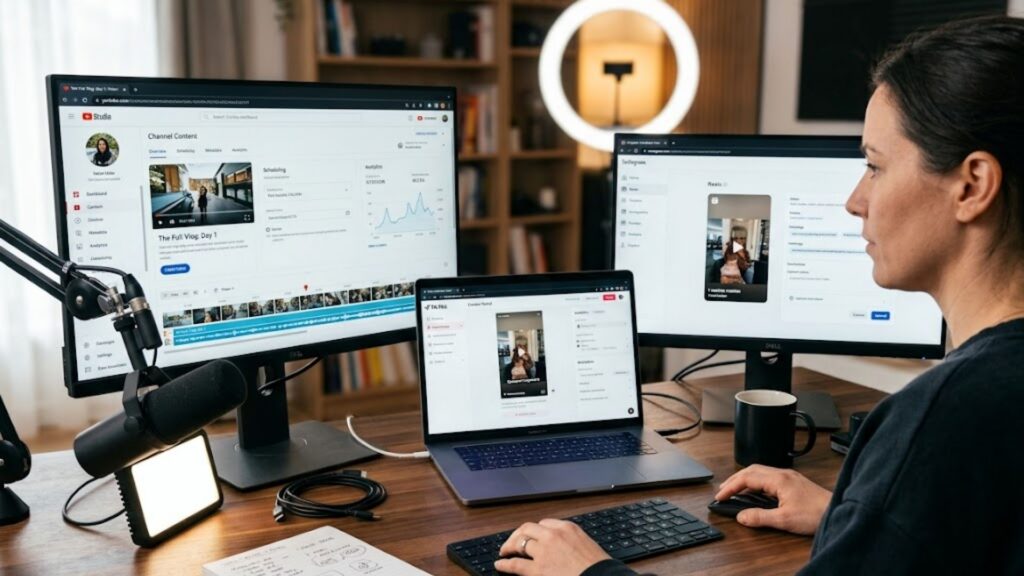
Different distribution networks process video uploads through distinct programmatic rules and user behavior patterns. A publishing timeline that works exceptionally well for short video feeds may prove counterproductive on long-form video platforms. Tailoring your channel workflow to match the nuances of each major video environment guarantees maximum reach and retention.
YouTube Shorts and Long-Form Frequency
Navigating YouTube requires balancing short-form rapid growth with long-form watch time accumulation. Determining how often to post YouTube Shorts depends primarily on your channel’s production bandwidth and niche maturity. For new channels, uploading 1 to 2 Shorts per day accelerates data collection, helping YouTube identify your ideal audience demographic within 30 to 60 days.
- Shorts Frequency: 1 to 2 videos daily for new channels; 1 video daily for established accounts.
- Long-Form Frequency: 2 to 3 videos weekly, spaced evenly across non-consecutive days.
- Hybrid Strategy: Post daily Shorts during morning hours, followed by long-form uploads in the late afternoon.
Long-form YouTube videos demand deeper narrative structure and sustained attention. Uploading long-form content 2 to 3 times per week gives each video sufficient time to collect watch time hours before the next upload competes for subscriber impressions. Utilizing specialized AI script generation tools streamlines the drafting phase for longer videos, ensuring your talking points stay tight, engaging, and structured for viewer retention.
Instagram Reels and TikTok Publishing Rhythms
Short-form mobile feeds operate on rapid content cycles where freshness heavily influences distribution. On Instagram and TikTok, publishing 1 to 3 times per day yields optimal results during initial account expansion. Because short video platforms continuously test posts against small audience clusters, posting multiple times daily increases your statistical probability of entering trending algorithmic pools.
Finding the best time to post reels requires analyzing account insights to determine when your primary geographic demographic is active. Midweek time slots between 11:00 AM and 1:00 PM, as well as evening windows from 6:00 PM to 9:00 PM, consistently deliver high initial engagement across general interest niches.
Posting Cadence and Scheduling for Faceless Channels Strategy Matrix
| Platform | Recommended Daily/Weekly Volume | Peak Local Posting Windows | Target Viewer Retention Goal |
| YouTube Shorts | 1 – 2 Videos Daily | 12:00 PM – 3:00 PM, 7:00 PM – 9:00 PM | 85% – 100%+ Average Percentage Viewed |
| YouTube Long-Form | 2 – 3 Videos Weekly | 2:00 PM – 5:00 PM (Thu – Sat) | 45% – 55%+ Average View Duration |
| Instagram Reels | 1 – 2 Videos Daily | 11:00 AM – 1:00 PM, 6:00 PM – 8:00 PM | 70% – 90% Hook Retention (First 3s) |
| TikTok | 2 – 3 Videos Daily | 9:00 AM, 12:00 PM, 7:00 PM – 10:00 PM | 60%+ Completion Rate |
Executing a proper posting cadence and scheduling for faceless channels requires aligning video output with your target audience’s peak browsing hours. Establishing this multi-platform calendar manually can quickly become overwhelming, especially when managing multiple channel accounts simultaneously. Implementing an end-to-end audio to video AI platform automates voice synthesis, visual assembly, and media rendering, removing production bottlenecks.
Building an Automated Content Pipeline and Batch Production System
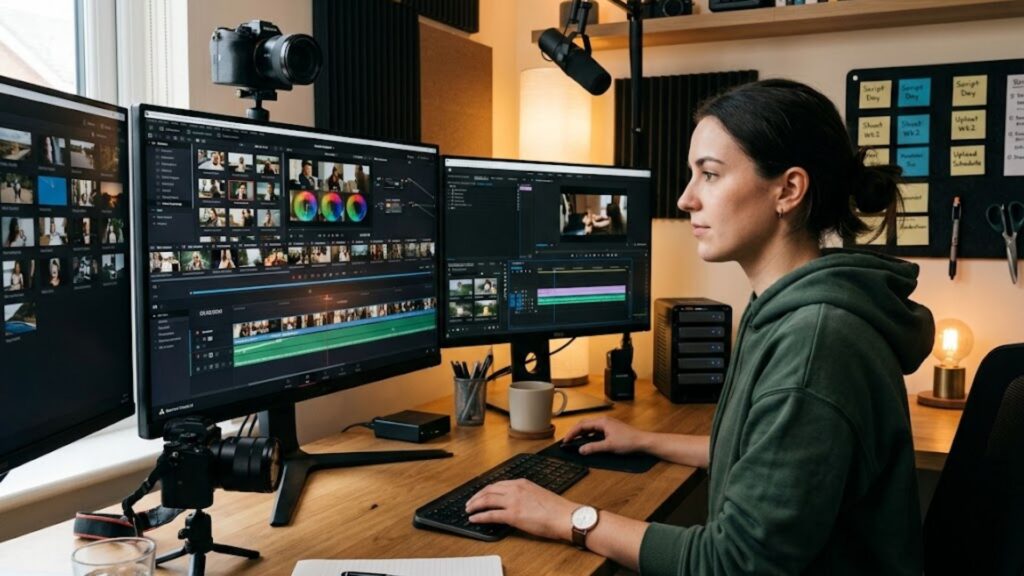
Achieving long-term sustainability as a digital media operator depends entirely on separating content creation from content distribution. Trying to research, generate, edit, and publish a video every single day leads to quick creative exhaustion and inconsistent posting times. Successful channel managers rely on batch processing workflows to produce weeks of high-grade video content in a single continuous session.
To build an efficient pipeline, dedicate specific days of the week exclusively to research, script outline generation, media assembly, and final rendering. Generating 15 to 30 video assets in one concentrated session allows you to load scheduling queues well in advance. Utilizing an intuitive AI video content creator platform like Syllaby AI enables creators to outline topic clusters, generate voiceovers, and produce complete visual timelines without leaving a single centralized interface.
- Step 1 (Topic Clustering): Identify 10 to 15 core questions or concepts relevant to your topic area.
- Step 2 (Script & Audio Assembly): Generate clear voiceover scripts optimized for strong opening hooks.
- Step 3 (Visual Pairing): Match realistic voice synthesis with high-definition stock footage or custom visual scenes.
- Step 4 (Automated Queuing): Load all rendered media files into a central schedule buffer.
Maintaining this asset buffer guarantees that your publishing schedule remains active even during travel, personal illness, or busy work weeks. A reliable workflow allows channel owners to scale content strategies across various industries without compromising video quality or brand clarity.
Strategic Scheduling and Multi-Platform Cross-Pollination
Maximizing return on investment requires repurposing high-performing video assets across every major short-form network. A video produced for YouTube Shorts can easily serve as an Instagram Reel, TikTok video, and Facebook Reel with minor adjustments to caption formatting and audio tags. Cross-pollination multiplies overall reach while drastically reducing creative work per impression.
To handle multi-network publishing seamlessly, digital creators rely on a robust social media scheduling tool multi platform system. Scheduling software automatically publishes uploaded media at pre-selected times, eliminating manual platform log-ins and preventing unexpected delays. With built-in content tools in Syllaby AI, creators can organize asset queues and streamline multi-network management effortlessly.
Technical integration across custom workflows is equally straightforward for growing video agencies. Developers can leverage a custom video integration API to connect proprietary content creation pipelines directly to auto-publishing pipelines. This level of system automation ensures that your faceless channels operate continuously, capturing viewer traffic across global time zones day and night.
As channels expand, managing capital expenses against revenue potential becomes a core business operational focus. Reviewing flexible software pricing plans ensures that independent managers and scaling agencies alike select production tiers matched to their current publishing volume.
Scaling Your Channel Operations and Audience Engagement
Once your core publishing cadence is running smoothly on autopilot, focus shifts toward performance analytics and community building. Monitoring early performance metrics during the first two hours following an upload provides valuable feedback regarding hook strength, thumbnail clarity, and metadata effectiveness. If early viewer retention drops sharply within the first three seconds, refine opening script hooks for future uploads.
Audience interaction remains vital for signal boosting, even when operating an anonymous brand. Replying to viewer comments within 30 minutes of publishing creates positive community feedback loops and signals active engagement to platform recommendation algorithms. Using pinned comments to pose open-ended questions invites community discussion and significantly increases comment counts.
If you are looking to scale channel portfolios or require tailored technical setups for custom media workflows, feel free to get in touch with our team at Syllaby AI for personalized setup guidance. Scaling multiple automated properties becomes straightforward when structured scheduling technology works silently in the background.
Conclusion: Achieving Long-Term Channel Growth Through Automation
Establishing a successful digital video presence does not require personal on-camera appearances or manual daily uploading. Sustainable digital channel growth relies on operational consistency, data-backed publishing windows, and optimized production workflows. By batch-producing assets, cross-posting strategic short-form content, and deploying automated media software, operators build resilient media channels capable of long-term digital monetization. Mastering your posting cadence and scheduling for faceless channels transforms video creation from a chaotic daily chore into a predictable, automated business engine built for perpetual growth.
Frequently Asked Questions
What is the ideal posting cadence for a new faceless channel?
A new faceless short-form video channel should ideally post 1 to 2 times daily on platforms like YouTube Shorts, TikTok, and Instagram Reels. For long-form video platforms, uploading 2 to 3 well-structured videos per week provides optimal watch-time accumulation without overwhelming recommendation algorithms.
How far in advance should I schedule faceless video content?
It is recommended to maintain a content buffer of at least 2 to 4 weeks. Scheduling content 14 to 30 days in advance protects your channel against posting gaps, maintains algorithm momentum, and allows creators to plan multi-video content series systematically.
Can posting too frequently hurt channel reach?
Yes, publishing too frequently in a single day can split subscriber impressions and reduce total watch time per video. Uploading more than 3 to 4 short-form videos daily on a single account often leads to audience fatigue and lower early engagement signals.
Should I post faceless short-form and long-form videos at the same time?
No, it is best to space short-form and long-form uploads several hours apart. Publishing short-form videos during early afternoon hours and long-form videos during late afternoon or early evening prevents internal feed competition among your subscriber base.
Do automated scheduling tools impact platform reach or view count?
No, major social networks permit scheduled uploads through approved publishing tools or native platform schedulers. Algorithms prioritize user retention, watch duration, and click-through rate over whether a video was published manually or through an automated queue.