





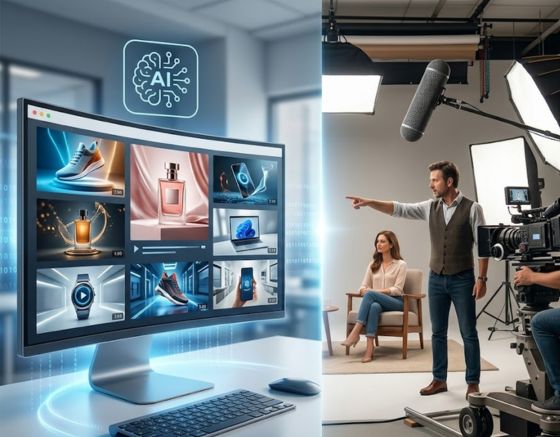
To stay ahead in today’s fast-moving digital market, brands must choose between investing in manual filming crews or using cloud-based software to scale their marketing. When evaluating modern content strategies, utilizing an AI Video Ads Generator reduces your upfront creative costs by up to ninety percent, shortens delivery times from weeks to minutes, and dramatically improves performance metrics through rapid creative testing. This software-driven approach allows marketing teams to maintain a continuous presence across social platforms without draining their annual budgets.
As advertising networks demand a constant stream of fresh assets, the traditional production pipeline has become a major operational bottleneck. Studios simply cannot produce the volume of distinct variations required to keep ad performance high and prevent viewer fatigue. This analysis explores how automated tools compete with physical shoots, helping you decide which model fits your business goals.
Whether you run a scaling startup, manage a creative agency, or lead marketing for a global company, your production workflow directly impacts your customer acquisition efficiency. By understanding the core mechanics of both approaches, you can build a highly optimized creative pipeline. Let us look closely at how these two methodologies compare across cost, speed, and real-world results.
Dissecting Traditional Video Production Workflows
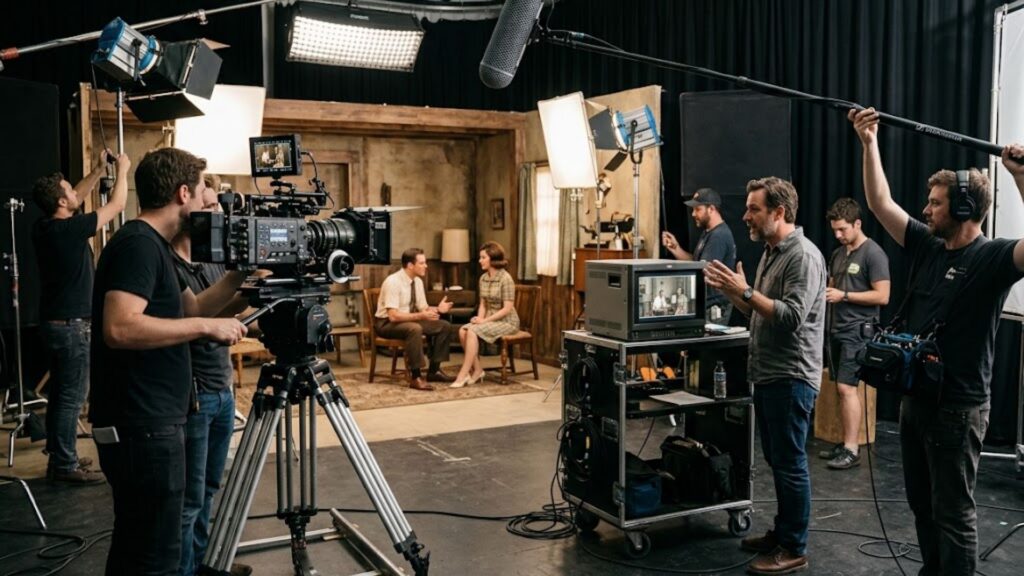
Traditional video creation relies on a highly structured, multi-phase system that has remained unchanged for decades. This methodology prioritizes artistic control, professional lighting, and customized physical spaces to deliver a specific brand aesthetic. However, capturing even a few minutes of high-quality footage requires extensive coordination across several distinct stages of production.
The workflow begins weeks before a camera is ever set up. Scriptwriters, storyboard artists, creative directors, and casting agents must collaborate to lock down the visual concept. Securing the perfect filming location, obtaining local permits, and purchasing insurance policies add further complexity to these early stages.
When the actual shoot day arrives, logistical coordination becomes highly demanding. You must manage camera operators, audio technicians, lighting specialists, makeup artists, and on-screen actors simultaneously. This large physical footprint makes it difficult to adjust the creative direction once filming has commenced.
The True Cost of Physical Studio Shoots
The financial demands of a physical commercial shoot are heavily tied to manual labor and specialized hardware. Renting professional cinema cameras, lenses, lighting packages, and sound stages requires significant capital upfront. Even a relatively basic shoot with a minimal crew can easily cost thousands of dollars per day.
Furthermore, physical shoots are subject to strict real-world limitations. If your product packaging changes, or if you need to update your pricing structure, you must schedule a completely new shoot. This lack of flexibility makes traditional production a high-stakes investment where a single mistake can ruin your budget.
These resource barriers prevent many smaller brands from maintaining a consistent presence on video-first platforms. A single premium asset can absorb a company’s entire quarterly budget, leaving very little capital remaining for actual ad distribution.
The Post-Production Bottleneck
The post-production phase is another stage where creative projects frequently encounter major delays. After capturing raw footage, editors must organize hours of files, synchronize external audio, apply color grading, and layer in sound designs. This highly detailed manual editing means a single short commercial can spend weeks in post-production.
Review and approval cycles introduce additional delays to this linear timeline. Corporate brand managers, legal teams, and clients often request multiple rounds of adjustments. Each round requires the editor to reopen project timelines, render large files, and re-export the assets for feedback.
Ultimately, traditional creation acts as a linear system where doubling your output requires doubling your staff, shoot days, and editing budgets. This scaling model makes it impossible for performance marketers to keep pace with the massive creative volume demanded by modern ad platforms.
How an AI Video Ads Generator Redefines Content Creation
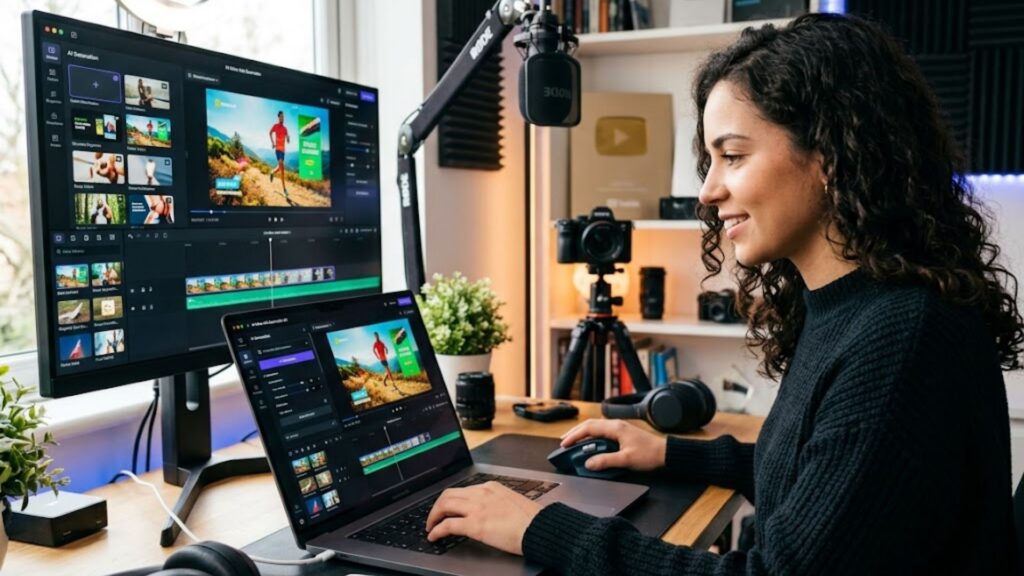
Automated cloud platforms bypass physical limitations by replacing cameras, stages, and manual editing bays with centralized software. Operating an AI Video Ads Generator allows a single marketer to oversee the entire creative pipeline from a personal laptop without managing dozens of contractors. This transition represents a structural shift in how marketing assets are built and scaled.
Using cloud-based automation tools, you can provide a text prompt, share a product page link, or upload an existing outline to start the process. The platform automatically organizes the content, matches the script with relevant background visuals, and synthesizes clear voiceovers.
This streamlined system allows businesses to treat creative development as an agile process rather than an overwhelming operational event. Because the cost of creation is minimal, teams can test experimental concepts and unique hooks without worrying about the financial impact of a campaign that does not perform.
Automated Scripting and Concept Outlines
Every high-performing ad begins with a strong script that captures attention within the first few seconds. Writing dozens of unique hooks manually is highly time-consuming, but utilizing an AI script generation tool allows marketing teams to draft high-converting concepts in seconds. These platforms analyze successful advertising patterns to write copy built on proven human psychology.
This technology helps marketing departments move past creative blocks and empty screens. Writers can quickly select from different emotional angles, user pain points, or educational structures. This ensures that every asset generated is optimized specifically for direct-response marketing performance.
Once the script is generated, it serves as the foundation for the entire video. The timing of physical transitions, the speed of the voiceover narration, and the placement of on-screen captions are all synchronized automatically to match the written text.
Professional Digital Actors and Global Casting
Managing actor contracts, scheduling filming times, and negotiating usage rights can be incredibly complex for growing brands. To simplify this process, Syllaby AI offers access to a diverse catalog of highly realistic digital presenters. These virtual actors deliver your marketing scripts with natural physical movements, realistic facial expressions, and precise lip synchronization.
These digital presenters require no travel arrangements, studio space, or recurring usage fees. Marketers can choose from an extensive range of ages, visual styles, and vocal tones to find the perfect match for their target demographic.
By exploring the main Syllaby platform, companies can access streamlined templates that make selecting their digital presenter incredibly straightforward. This makes it simple to maintain a unified, recognizable brand voice across hundreds of unique social media uploads.
Visual Assembly and Scene Building
In an automated workflow, visual selection and narration rendering happen simultaneously. The underlying software matches your script with relevant background videos, images, or custom graphics to ensure a cohesive viewer experience. This alignment helps reinforce your core marketing message throughout the entire video.
On-screen captions and text overlays are generated automatically, ensuring your ads perform exceptionally well even when users view them with their devices muted. You can customize branding, fonts, colors, and asset placement with a few clicks.
Because these visual components are entirely digital, making updates is simple. If a product feature changes or you want to swap out a background clip, you can edit the project in your digital dashboard and render the update in minutes.
The Financial Realities of Modern Video Advertising

Integrating software automation into your marketing strategy fundamentally changes how your business budgets for visual content. Historically, every creative variation required booking more studio time or paying high agency retainers. In contrast, cloud platforms allow you to run unlimited renders for a predictable monthly fee, reducing the cost of producing extra assets to zero.
This shifts your creative budget from a heavy capital expenditure to an affordable operating expense. Instead of spending five thousand dollars on a single brand film, you can direct that capital toward actual ad spend, increasing your brand’s market reach.
For businesses with large product catalogs, these savings compound rapidly. Let us look at the specific cost areas to see exactly how these savings are realized across different production scales.
Upfront Capital and Resource Allocation
Traditional commercial campaigns require significant upfront payments. You must pay location deposits, talent fees, and crew rates before capturing any footage. This setup carries major financial risk, particularly if the initial creative angle fails to convert your target audience.
Software platforms operate on a much more accessible financial model. With a basic subscription, you get immediate access to visual generation tools, voice translation services, and quick cloud rendering engines.
This model makes high-quality video advertising accessible to businesses of all sizes. Startups and local brands can compete directly with larger companies by focusing their capital on product development and market research rather than equipment rentals.
The Hidden Expenses of Revisions and Updates
A common oversight in video budgeting is the long-term cost of updating older assets. A traditional video commercial is static. If you need to make a small change, like updating a price point or translating the voiceover for a new market, you must pay specialized agencies hourly editing fees.
These minor updates can quickly accumulate, costing hundreds of dollars per revision. If your original actor is no longer available to film a quick update, you might have to scrap the entire campaign and start over from scratch.
Cloud platforms eliminate these update barriers. You can quickly copy an existing project, make text adjustments, and generate a brand-new asset in less than five minutes. This approach makes localizing content, running seasonal sales, and updating promotions a natural part of your daily operations.
Speed and Scalability: Reaching the Market Instantly
In digital marketing, speed is a major competitive advantage. If your competitors can identify a trending topic, write a high-converting script, and launch a targeted ad campaign within an afternoon, a multi-week production cycle will keep your brand far behind. A production comparison highlights how software tools consistently outperform physical teams in speed of execution.
Because manual filming relies on physical coordinates and human schedules, it is naturally slow. Weather delays, travel issues, and backlogged editing schedules can easily derail your launch timelines.
Automated software removes these physical dependencies. The moment your team comes up with a new marketing angle, you can develop the concept, generate the asset, and run the live campaign within an hour.
Launching Campaigns in Hours Instead of Weeks
Suppose you want to launch a special promotional offer for an upcoming holiday weekend. With traditional workflows, you would need to plan this campaign at least a month in advance to ensure the final edits are completed, polished, and ready for use.
With modern cloud creation tools, you can identify a sudden market shift and have multiple targeted ad variations active on your social accounts by the end of the day. This responsiveness allows you to capture consumer interest when it is highest.
This rapid execution also reduces operational pressure on internal marketing teams. Instead of managing complex project timelines with external vendors, your staff can focus on studying campaign performance data and refining creative concepts.
Capitalizing on Rapid Social Media Trends
Social media platforms are driven by fast-moving trends and cultural conversations that often last only a few days. Traditional agencies struggle to capture these fleeting opportunities due to their rigid, multi-week production cycles.
By utilizing flexible, software-based creation tools, you can write scripts and generate videos that join these trending conversations immediately. This responsiveness helps your brand appear highly engaging, current, and relevant to your audience.
If you want to quickly build and test these trend-focused concepts, you can contact our support team to see how our software fits into your social media marketing and agile advertising strategies. Having this capability ensures your brand remains active in a fast-moving digital space.
Evaluating Campaign Performance and ROI
At the end of the day, every creative methodology must be evaluated by its contribution to business growth. Analyzing video marketing ROI requires a balanced look at both your upfront creation costs and the conversion rates of your live campaigns.
Because automated software allows you to produce high-quality assets at a fraction of the cost of a traditional agency, your overall customer acquisition costs drop significantly. Your automated ads do not need to convert ten times better than traditional ones to yield a superior return; they simply need to perform comparably while costing a fraction of the budget to make.
In fact, real-world campaign data shows that high-volume, automated creative strategies often outperform highly polished studio ads on paid networks. Let us look at why this happens and how you can apply these principles to your accounts.
The Dynamics of Customer Acquisition Costs
Ad network algorithms rely on advanced machine learning to pair your creative assets with the most receptive consumer groups. To do this effectively, the platform must test various hooks, visual styles, and calls-to-action across different user segments.
If you only upload a single, expensive video commercial, the algorithm has very little data to work with. If that single asset fails to engage viewers, your customer acquisition costs will rise, leading to a poor return on your ad spend.
By utilizing automated creative tools, you can upload ten distinct creative variations for the cost of a single physical shoot. This variety gives the ad platform the data it needs to optimize delivery, lowering your costs and maximizing your sales.
Systematic Creative Testing and Hook Variations
Modern creative testing requires an organized approach to asset development. You should ideally test multiple variations of your video’s opening three seconds, as this initial hook is responsible for stopping users from scrolling past your brand.
In a traditional filming environment, capturing five different opening hooks requires careful planning and extra talent fees. In an automated system, you simply copy your base project template, edit the introductory lines of text, and generate five unique versions.
This systematic approach allows you to identify exactly what messaging resonates with your customers. Once you find a winning hook, you can confidently increase your ad spend, knowing your campaign is backed by performance data rather than personal opinions.
Side-by-Side Methodology Comparison
To help you visualize the core differences between these two creation methodologies, we have compiled a direct comparison highlighting the practical trade-offs in cost, turnaround times, and scalability.
| Feature / Metric | AI-Powered Video Generation | Traditional Studio Production |
| Average Cost per Video | $10 to $200 | $1,500 to $10,000+ |
| Standard Turnaround Time | Under 10 minutes | 2 to 6 weeks |
| Staffing Requirements | 1 operator (marketer or founder) | Camera crew, actors, director, editor |
| Creative Testing Scale | High (generate dozens of variations daily) | Low (limited by shoot day budgets) |
| Ease of Revisions | Instant edits via text input | Requires reshoots or manual editing hours |
| Best Suited For | Paid social ads, UGC, bulk product videos | Brand documentaries, premium cinematic spots |
This breakdown shows that while traditional studio production remains valuable for high-end cinematic branding, automated tools offer a superior solution for performance-driven, high-volume social campaigns.
Strategic Allocation: Deploying the Right Tool
Choosing between automated creation platforms and traditional shoots does not have to be a binary decision. Many highly successful modern brands use a hybrid model, matching the production methodology to the specific marketing channel and campaign goal.
Understanding the unique advantages and limitations of both systems allows you to distribute your marketing capital strategically. Let us examine the specific use cases where each approach excels.
By placing your capital where it will deliver the highest impact, you can build a highly optimized creative engine that supports both your immediate sales goals and your long-term brand reputation.
Optimal Use Cases for Traditional Studio Production
Traditional video campaigns are highly effective when your primary marketing goal is emotional storytelling, luxury brand positioning, or high-end product presentation. For example, a Super Bowl advertisement, a high-impact cinema spot, or a flagship website homepage video benefits greatly from professional cinematography and human direction.
These placements demand creative nuance, complex camera movements, and physical interactions that software cannot easily replicate. If your brand identity is built on high-end luxury or real-world craftsmanship, investing in professional studio filming remains a wise choice.
Additionally, traditional shoots are necessary when you must showcase physical products in complex, real-world scenarios. In-person demonstrations, live events, and detailed physical interactions are areas where high-end physical cameras still provide unmatched precision.
Optimal Use Cases for AI-Generated Ad Creative
For most other digital marketing initiatives, software-driven tools offer a faster and more cost-effective solution. This is especially true for paid channels like TikTok, Meta, Instagram, and YouTube Shorts, where users prefer engaging, organic-looking content over highly polished corporate ads.
If you need to create product explainer videos, run seasonal sales promotions, or launch localized campaigns across multiple regions, automated platforms are highly efficient. They allow you to maintain a continuous stream of fresh, engaging creative assets without exhausting your resources.
Using a platform like Syllaby AI is also perfect for e-commerce brands with diverse product catalogs. Creating unique, high-quality video ads for hundreds of different products becomes incredibly simple when you can automate the scriptwriting, voiceover, and editing process.
Modernizing Your Creative Team’s Workflow
Adopting automated production tools involves more than just implementing new software; it changes how your creative team operates. Instead of spending their days coordinating shoots and managing tedious editing timelines, your staff can transition into strategic director roles.
Your copywriters can focus on analyzing ad performance data and writing highly engaging hooks. Your designers can focus on building cohesive visual styles, setting guidelines, and ensuring all generated assets align perfectly with your brand identity.
This shift in responsibilities improves overall team output and allows your staff to focus on high-impact strategic tasks. Rather than acting as technical operators, they become creative directors who guide your brand’s overall marketing direction.
Building Your Internal Production Pipeline
To start building your own internal automated pipeline, we recommend a phased approach. Start by identifying your highest-volume, lowest-risk video needs, such as basic social media ads, quick product explainers, or localized ad variations.
Equip your marketing team with the right tools, and establish clear brand guidelines regarding fonts, color schemes, and preferred digital presenter styles. This ensures that every asset generated looks polished and matches your broader brand identity.
If you want to see exactly how this modern workflow can be customized for your team, we invite you to schedule a personal onboarding demonstration with one of our specialists today. We will walk you through our complete software suite and show you how to start scaling your ad accounts with highly engaging, high-performing visual creative.
Frequently Asked Questions
How much budget can a business save by using an automated creative platform?
On average, switching to automated creative systems reduces your production costs by eighty to ninety-five percent. While a traditional creative agency shoot for a simple brand video can easily cost thousands of dollars in crew fees and equipment rentals, a high-quality automated video can be generated for just a few dollars in cloud processing costs. This allows you to reallocate your valuable capital directly to your active ad spend, maximizing your brand’s reach and impact.
Do automated video ads convert as effectively as studio footage?
Yes, and in many direct-response marketing scenarios, automated videos actually outperform traditional studio assets. This is because modern viewers on platforms like TikTok and Instagram Reels tend to skip highly polished, corporate-looking commercials in favor of authentic, raw, and organic-looking content. Automated tools allow you to easily create engaging, creator-style videos that blend naturally into user feeds, resulting in higher click-through rates and better overall conversions.
What is the typical turnaround time for generating a high-quality video ad?
With a modern cloud platform, you can go from an initial product concept to a polished, ready-to-publish video ad in under ten minutes. The system automates the writing, voice generation, visual assembly, and captioning processes, completely bypassing the weeks of planning, filming, and manual post-production required by traditional creative agencies.
Are these automated video assets compatible with YouTube, Meta, and TikTok?
Yes, these tools are specifically built to meet the technical specifications and aspect ratios of all major digital advertising networks. You can easily export your videos in vertical formats for TikTok and Instagram Reels, square formats for Facebook feeds, or widescreen formats for traditional YouTube campaigns, ensuring your brand has a consistent, professional presence across all marketing channels.
Is prior video editing experience required to use these platforms?
No prior video editing, scriptwriting, or technical animation experience is required to use modern automated systems. The platforms are designed to be highly intuitive and user-friendly for business owners and marketers of all skill levels. You simply input your product details, select your preferred digital actor, and let the cloud system handle the heavy lifting.
Conclusion: Embracing the Future of Video Advertising
The digital landscape moves too quickly for traditional, slow-paced creative workflows to remain viable for performance advertising. While physical shoots still hold value for premium, cinematic brand films, they simply cannot scale to meet the continuous demand of modern social media ad networks.
By picking the right AI Video Ads Generator, you can combine speed, cost-efficiency, and high-performance creative into a single, scalable marketing system. This allows you to test more ideas, reach more audiences, and maximize your advertising investments.
Are you ready to stop overpaying for slow agency shoots and start scaling your video creative? Sign up today to see how our automated platform can transform your creative workflow and help you build highly engaging, high-performing ad campaigns in minutes.