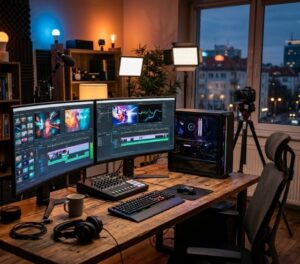






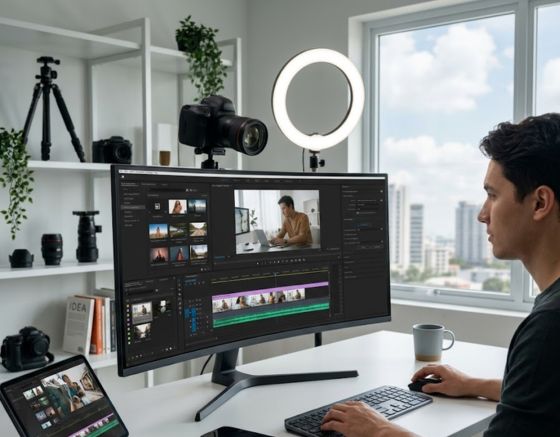
Are you looking to scale your brand’s digital presence without draining your entire marketing budget? An automated video creation tool reduces content production costs by eliminating expensive studio rentals, streamlining scriptwriting, and cutting down on manual editing hours. By automating the technical barriers of the production pipeline, businesses can produce high-quality videos at a fraction of the traditional cost. This shift allows organizations of all sizes to maintain a consistent publishing schedule while maximizing their return on investment.
In the past, producing a single professional video required a small army of specialists, including copywriters, videographers, editors, and actors. Each step of the process introduced potential bottlenecks and unexpected expenses that quickly inflated the final invoice. Today, intelligent software solutions are rewriting this narrative, making high-impact visual media accessible to any business with an internet connection.
Understanding the direct correlation between technology and cost reduction is essential for modern marketing teams. By analyzing where traditional methods fail to scale, we can see exactly how digital transformation changes the economics of modern communication.
The True Cost of Traditional Video Production
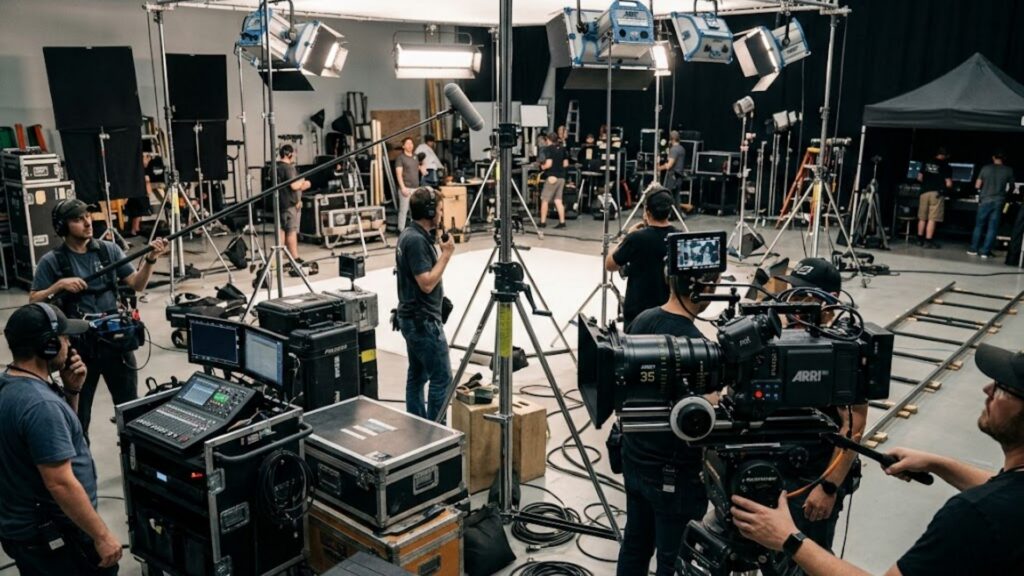
To understand the savings offered by modern software, we must first examine the financial realities of traditional video production. A typical corporate video project involves multiple phases of development, each with its own set of billable hours and administrative fees. From initial brainstorming sessions to final export adjustments, the expenses stack up quickly.
Planning is often the most overlooked expense in the entire pipeline. Scriptwriting and storyboarding can take weeks of collaborative effort, demanding valuable time from internal stakeholders or costly external creative agencies. If the messaging changes late in the process, restarting the planning phase often incurs heavy financial penalties.
Once the pre-production phase is complete, the physical logistics of shooting begin. This stage is notoriously expensive, requiring specialized equipment, physical locations, and specialized personnel:
- Camera Gear and Accessories: Professional camera bodies, lenses, stabilizers, and storage media represent thousands of dollars in capital or daily rental fees.
- Lighting and Audio Equipment: High-quality microphones, wireless transmitters, light stands, diffusion panels, and power supplies are vital for clean footage.
- Studio Rental and Location Permits: Securing a professional environment requires booking fees, insurance coverage, and sometimes local government permits.
- Cast and Crew Labor: Hiring directors, camera operators, sound engineers, makeup artists, and on-camera talent requires competitive hourly or daily rates.
After the physical production concludes, the post-production phase begins. Editors must comb through hours of raw footage to find the best takes, synchronize audio tracks, perform color grading, and add graphical overlays. Each round of revisions between the client and the editor slows down the launch, delaying the campaign’s potential revenue generation.
Why Every Modern Marketing Team Needs an Automated Video Creation Tool
An automated video creation tool fundamentally changes how businesses approach visual storytelling. By replacing physical logistics with digital simulation, this software allows you to generate professional media in minutes rather than weeks. This shift is particularly critical for social media platforms where content consistency is directly tied to algorithmic reach and brand visibility.
With the right software, you no longer need to worry about booking physical spaces or organizing complex shoot schedules. Instead, your team can focus on refining your message and targeting the right audience segments. The immediate availability of visual assets means your marketing team can react to industry trends in real-time, publishing highly relevant material while the topic is still hot.
Furthermore, these tools make it incredibly simple to test multiple variations of a single concept. If you want to compare different hooks or calls to action, you can generate multiple iterations without paying for a second production day. This level of flexibility was once impossible for brands operating on standard mid-market budgets.
The Pillars of Content Efficiency in Modern Marketing
In the fast-paced digital landscape, maintaining a high volume of output is essential for survival. This is where the concept of content efficiency becomes a competitive advantage for growing brands. By optimizing every step of your creative workflow, you ensure that no time or capital is wasted on redundant tasks.
Achieving this level of efficiency requires a shift away from traditional linear production models. Instead of treating each video as an isolated event, successful companies look at their production as a continuous pipeline. Software-driven automation allows for a highly repeatable system that delivers reliable results every single day.
When you remove the friction points of manual editing and filming, your team can dedicate more energy to strategy and distribution. This balance is critical for growing businesses that need to scale their footprint without hiring an army of creators. The goal is to maximize the utility of every single piece of information your company produces.
To achieve maximum output with minimal waste, businesses must invest in smart platforms that handle the heavy lifting. This is why many organizations turn to the Syllaby AI platform to centralize their creation workflows and keep their teams aligned under a single, highly efficient system.
Streamlining the Scriptwriting Phase
The foundation of any successful video is its script, yet this is often where creative projects stall. Writing a script that is engaging, informative, and structurally sound requires a deep understanding of audience psychology. When done manually, this process can involve endless revisions and creative blocks that delay the entire campaign.
By utilizing an AI video script generator, marketing teams can instantly produce drafts that are tailored to specific audiences. These tools analyze top-performing industry trends to generate outlines that capture attention within the first few seconds. This drastically reduces the time spent staring at a blank document, allowing writers to focus on editing and personalization.
We can analyze the timeline differences between these two methodologies:
- Manual Scriptwriting Process: This process involves manual topic research, drafting the initial hook, developing body copy, and writing a call to action. It typically demands two to four hours of active writing time.
- Automated Script Generation: This workflow requires entering a focus topic, selecting an appropriate tone, and initiating automated synthesis. The entire process is finalized in approximately thirty seconds.
Scripting automation also ensures that your core messaging remains aligned with your overall marketing strategy. It helps maintain a consistent brand voice across dozens of assets, regardless of how many different team members are working on the project. This consistency builds trust with your audience over time, reinforcing your market authority.
Ultimately, accelerating the pre-production phase means you can move from ideation to final export much faster. By integrating AI script generation into your daily routine, you can build a robust editorial calendar that keeps your target audience engaged week after week.
Eliminating Post-Production Bottlenecks
Once raw footage is captured, the post-production stage often becomes a massive financial drain. Professional editors charge significant hourly rates to cut clips, balance audio, insert motion graphics, and correct colors. When changes are requested, the back-and-forth communication can extend project timelines by several weeks.
Automated platforms bypass these bottlenecks by handling the editing process through intelligent design templates. The system automatically syncs voiceovers with relevant stock footage, inserts transitions, and generates accurate closed captions. This guarantees a polished, highly professional result without requiring any technical editing skills from your team.
Consider the primary operational friction points resolved by modern software:
- Traditional Editing Bottlenecks: Manual importing and proxy generation, multi-track audio synchronization, physical color grading, frame-by-frame subtitle mapping, and long local rendering times.
- Automated Editing Solutions: Instant asset matching, automated audio leveling, pre-applied professional color templates, perfectly synced captions, and rapid cloud-based rendering.
By removing manual editing from your workflow, you also eliminate the long rendering times that slow down older computers. Cloud-based rendering engines process your files on high-performance servers, returning completed videos in a matter of seconds. This speed allows your team to maintain a rapid pace of production that keeps up with the demands of modern social channels.
Additionally, this technology allows for seamless localization. If you need to translate your video for global markets, automated systems can quickly swap out the audio track and update the subtitles. This degree of flexibility ensures your message reaches a global audience without requiring a brand-new production budget for each region.
Leveraging AI Business Videos for Corporate Communication

Corporate communication often requires a large volume of informational assets that must be updated regularly. Training modules, product updates, and internal announcements can quickly become outdated, requiring costly reshoots if you rely on traditional filming. This is where AI business videos provide an exceptional alternative for growing enterprises.
Using synthetic presenters and automated voiceovers, companies can update their internal and external libraries instantly. If a product feature changes, you simply edit the text script, and the system regenerates the video with the updated information. This eliminates the need to coordinate schedules with executives or external presenters for minor updates.
The operational differences between these corporate methods are highly distinct:
- Traditional Corporate Methods: High costs associated with camera crews and actors, days of filming and editing time, complex scheduling coordination, and difficult, expensive processes to implement minor updates.
- AI Automated Corporate Methods: Zero physical labor costs, creation completed in minutes, self-serve on-demand generation, and simple text edits required to refresh existing material.
These automated videos also maintain an incredibly professional appearance that aligns with corporate brand guidelines. The voiceovers sound natural and authoritative, while the visual backgrounds remain clean and on-brand. This level of quality control is essential for enterprises that must present a unified image to clients, partners, and employees alike.
By adopting these systems, companies can scale their communication efforts to reach every department, client, and lead. This comprehensive approach to media production ensures that your organization stays connected, informed, and ahead of the competition.
The Financial Breakdown: Traditional vs. Automated Production
To truly appreciate the value of automation, we must compare the actual expenses associated with both approaches. When you look at the numbers, the financial advantages of migrating to software-driven creation become undeniable. The table below outlines a typical cost comparison for a company producing ten short marketing videos per month.
| Cost Category | Traditional Production Method | Automated Video Creation Method |
| Scriptwriting & Concept Development | $1,500 (Agency fees or copywriter hours) | Included in platform subscription |
| Equipment & Studio Rentals | $2,500 (Cameras, lighting, space hire) | $0 (Completely virtual creation) |
| On-Camera Talent & Voice Actors | $2,000 (Day rates and usage licensing) | Included (Digital avatars and voices) |
| Video Editing & Post-Production | $3,000 (Professional editor fees) | Included (Automated transitions & text) |
| Revisions & Updates | $1,000 (Additional hours for adjustments) | $0 (Instant script edits and regeneration) |
| Total Estimated Monthly Cost | $10,000 | $49 to $150 (Platform subscription) |
This comparison highlights how traditional video production is highly inefficient for brands that need to produce media at scale. By moving to an automated system, you can reinvest thousands of dollars back into your direct advertising campaigns. This reallocation of resources dramatically improves your customer acquisition costs and overall marketing ROI.
Furthermore, the time saved during this process is an invaluable asset. Instead of spending weeks managing logistics, your team can deploy campaigns immediately, collecting real-time data to optimize future efforts. This speed to market is often the deciding factor in highly competitive digital spaces.
Scaling Your Content Output Effortlessly
The ability to scale your media output is a key driver of modern business growth. When you rely on manual production, scaling your volume requires a linear increase in budget and headcount. With an automated creation tool, however, the marginal cost of producing your next video drops virtually to zero.
This scalability is particularly valuable for businesses targeting multiple buyer personas. You can easily create customized versions of your message tailored to different demographics, industries, or pain points. This level of personalization increases engagement rates and drives higher conversion percentages across your sales funnels.
To implement this scale successfully, corporate teams often require specialized setups and dedicated support channels. If your organization is ready to transition to a high-volume media pipeline, you should consider exploring enterprise video solutions that offer custom licensing and advanced collaboration features.
Ultimately, scaling your content output allows you to dominate search engine results and social media feeds. By saturating your market with helpful, high-quality information, you build a powerful brand presence that competitors will struggle to match.
Maximizing Marketing ROI with Video Production Automation
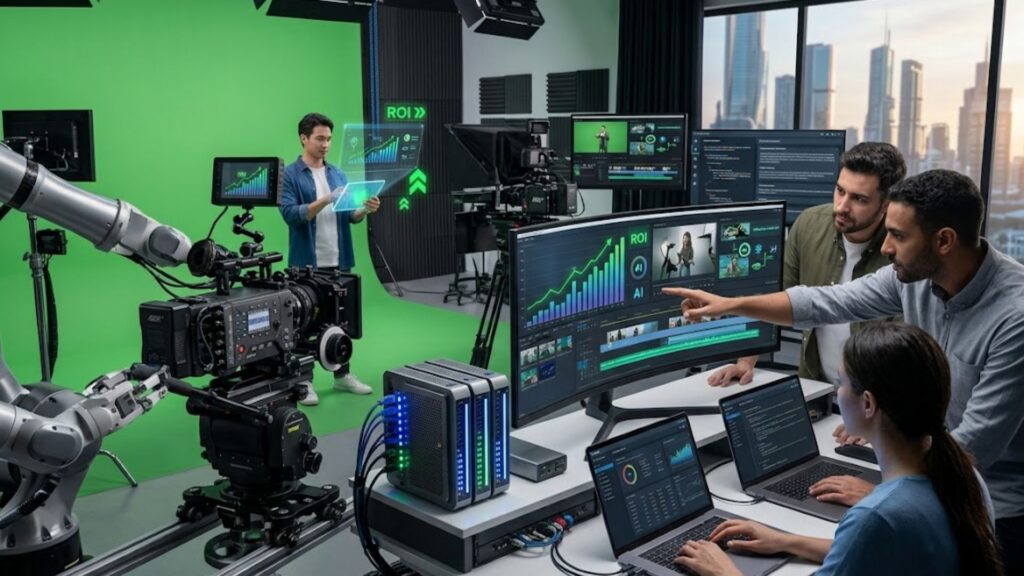
Investing in video production automation is not just about cutting costs; it is about driving measurable business results. When you can produce more high-quality assets in less time, you naturally increase your opportunities to capture leads and close sales. This efficiency translates directly into a healthier bottom line for your organization.
By lowering the barrier to entry, automation allows small and medium-sized businesses to compete with enterprise-level competitors. You no longer need a massive capital reserve to publish professional, informative videos that resonate with your target market. This democratization of media creation levels the playing field, rewarding brands that have the best message rather than the deepest pockets.
As your campaign data accumulates, you can easily refine your approach. If a particular topic or style performs exceptionally well, you can generate a dozen more variations in just a few clicks. This iterative process of refinement ensures that your marketing strategy remains highly responsive to consumer preferences.
If you are curious about how to integrate these advanced workflows into your existing business model, you can always reach out and contact our team to discuss your specific goals and requirements.
Frequently Asked Questions
How do automated video creation tools reduce the need for expensive hardware?
Automated tools perform all video rendering, asset integration, and processing in the cloud. This means you do not need expensive editing computers, high-end cameras, studio lighting, or professional audio gear to produce high-quality videos. A simple laptop or mobile device is all that is required to manage your entire production pipeline.
Can automated videos sound natural and professional?
Yes, modern automated systems use advanced text-to-speech technology and natural language processing to generate voices that sound incredibly human. These voices include realistic pauses, inflections, and tones, ensuring that your corporate communications and marketing materials maintain a professional, polished feel.
Is it difficult to learn how to use an automated video creator?
Not at all. These platforms are designed with intuitive, user-friendly interfaces that require absolutely no prior video editing or design experience. Most users can generate their very first professional video in under five minutes simply by entering a topic or prompt.
How does automating video creation impact brand consistency?
Automation helps you maintain perfect brand consistency by using pre-configured templates, custom colors, specific fonts, and unified voice profiles. This ensures that every piece of content your team produces looks and feels like it belongs to the same family, reinforcing your brand identity across all distribution channels.
Can these tools help with localizing videos for international markets?
Absolutely. Automated tools make it simple to translate your scripts into multiple languages and generate matching voiceovers and subtitles instantly. This allows you to expand your reach into new geographic markets without having to pay for new video shoots, local actors, or expensive translation agencies.
Transforming Your Production Workflow for Long-Term Growth
Transitioning to an automated video creation tool is one of the most impactful decisions you can make for your brand’s digital marketing strategy. By automating the repetitive, technical aspects of production, you free up your creative team to focus on what truly matters: crafting messages that connect with your audience. The dramatic reduction in pre-production, filming, and post-production costs allows you to build a sustainable, highly profitable content engine.
As consumer behavior continues to shift toward visual media, the demand for fast, high-quality, and authentic content will only grow. Organizations that embrace automation today will be uniquely positioned to capture market share, build audience trust, and drive consistent business growth. With Syllaby AI, you have the power to transform your content pipeline, reduce your production overhead, and scale your brand to new heights.