






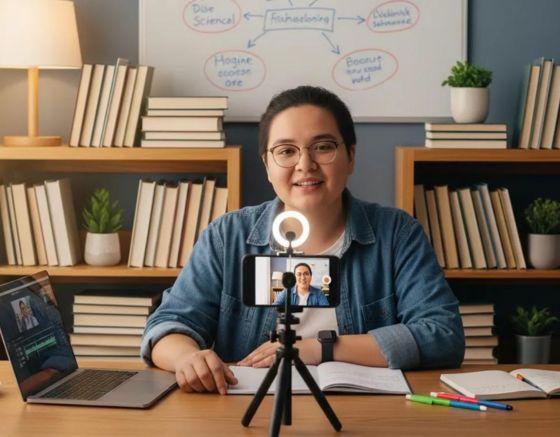
The demand for compelling e‑learning video content continues to grow. Text to Scenes AI is a mobile app built to convert text scripts into structured video scenes, streamlining production for educators and content teams. The tool reduces production friction, supports scalable content workflows, and enables personalised learning experiences. This article reviews the app’s features, the efficiencies gained from AI-driven production, and its mobile capabilities for creators and social media distribution. For full product details, see Text to Scenes AI.
Key Takeaways
- Text to Scenes AI automates e-learning video creation by transforming text scripts into engaging video scenes efficiently.
- The app’s user-friendly interface simplifies video production, making it accessible to educators with minimal technical skills.
- AI-driven automation reduces production time, allowing educators to focus on content quality and narrative development.
- Personalization features adapt video content to individual learner preferences, improving retention and understanding.
- Mobile capabilities enable educators to create high-quality videos anytime, supporting flexible and scalable content creation.
- Text to Scenes AI supports social media marketing by producing adaptable video formats for diverse platforms and audiences.
- Subscription plans offer scalable options tailored to individual users, small teams, and large organizations’ video production needs.
- Investing in AI video creation software delivers cost savings, time efficiency, and potential revenue growth through enhanced engagement.
- User success stories demonstrate improved educational outcomes and marketing effectiveness using personalized AI-generated videos.
How Does Text to Scenes AI Enhance E-Learning Video Production?
Text to Scenes AI applies AI to automate scene creation and simplify editing. Educators can generate scenes quickly and adjust content without extensive technical skills. The interface is designed for efficient workflow, and automation reduces the time needed to produce polished videos, allowing creators to prioritise instructional design and learning objectives.
| Feature | Benefit | Impact Level |
|---|---|---|
| Rapid Scene Generation | Speeds up video production | High |
| User-Centered Interface | Enhances usability for all users | High |
| Automation Efficiency | Reduces production time | High |
This comparison demonstrates how Text to Scenes AI’s core features reduce production overhead and enable faster delivery of engaging educational content.
AI’s adoption in e‑learning affects content generation and mobile learning, creating more dynamic and accessible educational experiences.
Artificial Intelligence’s Transformative Impact on Mobile E-Learningand Content Generation
Artificial intelligence systems are reshaping e‑learning by improving engagement, personalization, and accessibility. AI enables capabilities such as intelligent tutoring, predictive analytics, and adaptive learning pathways, each contributing to more effective instruction. These technologies also support gamification and robust mobile delivery, widening access and catering to diverse learner needs. Continued development in AI for content generation is likely to increase innovation and user engagement, and mobile AI solutions can enable highly tailored instructional methods that improve the effectiveness of mobile learning paradigms. AI Content Creation: Exploring the Potential of Mobile Learning, R Abd Karim, 2024
What Makes AI-Driven Video Creation More Efficient?

Efficiency comes from automating repetitive production tasks and maintaining consistency across scenes. Text to Scenes AI uses algorithms to map text to visual scenes and ensure coherent sequencing. The result is reduced manual effort and consistent presentation across multiple videos.
The time saved by automation lets educators concentrate on narrative structure and learning outcomes rather than technical editing. To review how these solutions apply across sectors, see industries.
How Does Personalization Improve Learning Outcomes?

Personalisation improves outcomes by aligning content format and pacing with individual learner needs. Text to Scenes AI offers dynamic adaptation that modifies visuals and delivery based on interactions and preferences. This targeted approach supports better retention and comprehension.
AI is changing content delivery, accessibility, and personalisation through methods such as machine learning and natural language processing.
The Transformative Influence of AI in E-Learning Personalization
Artificial intelligence has become a central force in e‑learning by enabling adaptive delivery, automated assessment, and real‑time feedback. Technologies such as machine learning, natural language processing, and intelligent agents power systems that respond to learner behaviour and engagement. This survey traces the progression from early automation and rule‑based tutors to modern personalization techniques that tailor instruction based on preferences, performance, and interaction patterns. From automation to personalization: A comprehensive survey on the role of ai in modern e-learning, 2025
Automated personalisation also enables multiple versions of the same lesson to suit different learning styles and paces. Such adaptability addresses the limitations of one‑size‑fits‑all approaches in diverse educational settings.
AI-driven personalisation in higher education can improve engagement, academic performance, and retention by tailoring digital learning experiences to individual students.
Artificial Intelligence Personalization in Higher Education E-Learning AI‑driven personalisation customises digital learning experiences for individual students and can positively affect engagement, performance, and retention. This paper reviews personalization methodologies in higher education, discusses open challenges, and presents an experimental study using the Open University Learning Analytics Dataset (OULAD). It examines recommender systems, intelligent tutoring systems, adaptive learning engines, machine learning approaches (including sequential models and reinforcement learning), and natural language processing feedback tools. Artificial Intelligence-Powered Personalization in E-Learning for Higher Education, 2026
What Mobile Features Make Text to Scenes Ideal for E-Learning Creators?
Text to Scenes AI includes mobile features designed for on‑the‑move content production. Key elements are an intuitive interface, automated scene generation, and options for customising visuals and audio to match learner needs. These capabilities support rapid iteration and deployment from mobile devices.
- User-Friendly Interface: The app’s intuitive design allows users to navigate easily, making video creation accessible to everyone.
- AI-Driven Scene Generation: This feature automates the creation of video scenes, saving time and effort.
- Personalization Options: Users can customize videos to suit their audience’s needs, enhancing engagement.
These mobile capabilities allow educators to produce professional videos whenever required, reducing the gap between idea and published content.
How Does Text to Scenes AI Support Scalable Social Media and Lead Generation?
Text to Scenes AI facilitates scalable social media by producing adaptable video formats that meet platform specifications. Automated scene generation accelerates content repurposing, enabling consistent messaging across channels.
The intuitive interface makes it straightforward to create targeted educational content for specific audiences. High‑quality videos can expand reach and attract potential leads by demonstrating value and expertise.
What Are the Benefits of Scalable Video Content for Social Media?
Scalable video content provides practical advantages for social media marketing:
- Efficient Production: The ability to quickly create videos allows for a more agile marketing strategy.
- Cost-Effectiveness: Reducing the time and resources needed for video production can lead to significant cost savings.
- Targeted Content: Scalable videos can be tailored to specific audiences, increasing engagement and conversion rates.
Collectively, these benefits support more effective outreach for educational institutions and content creators, improving engagement and conversion potential.
How Can AI Videos Drive Effective Lead Generation?
AI videos support lead generation by delivering relevant, educational content that addresses audience needs. Videos produced with Text to Scenes AI can inform viewers, demonstrate expertise, and prompt further engagement.
Consistent scheduling of new video content keeps audiences engaged and reinforces brand authority. Over time, this approach builds trust and improves conversion rates.
What Are the Subscription and Pricing Models for Text to Scenes AI?
Text to Scenes AI provides tiered subscription plans to suit different users. For full details, visit the pricing page.
- Basic Plan: $39/month
- Standard Plan: $79/month
- Premium Plan: $149/month
These plans are structured to offer flexibility so users can select the level of features and support that match their production needs and budget.
How Do Subscription Plans Cater to Different User Needs?
The subscription tiers are aligned to common user profiles:
- Basic Plan: Ideal for individuals or small projects, offering essential features for basic video creation.
- Standard Plan: Suitable for small teams, providing additional features for collaborative projects.
- Premium Plan: Tailored for larger organizations, offering advanced features and support for extensive video production needs.
This tiered model ensures users can scale their subscription as their production requirements evolve.
What Is the ROI of Investing in AI Video Creation Software?
Adopting AI video creation tools can yield measurable returns. Key benefits include reduced production costs, faster time to publish, and improved content performance that can drive revenue.
- Cost Savings: Reducing the time and resources spent on video production can lead to substantial financial savings.
- Time Efficiency: Automating the video creation process allows users to focus on content quality rather than technical execution.
- Revenue Increases: High-quality videos can enhance engagement and conversion rates, ultimately driving revenue growth.
These factors illustrate the financial advantages of integrating AI-driven video production into educational and marketing strategies.
What User Success Stories Demonstrate Text to Scenes AI’s Effectiveness?
Case examples report improved learner engagement and comprehension when educators use personalised video content. Marketers have also seen stronger campaign results by deploying targeted educational videos that align with audience needs.
These outcomes highlight how AI‑driven video creation can produce tangible benefits in both education and marketing contexts.
If you have questions or require assistance, please contact us.
Frequently Asked Questions
What types of content can I create with Text to Scenes AI?
Text to Scenes AI supports a range of educational video formats, including tutorials, lectures, and promotional materials. The app converts text scripts into structured scenes and allows formatting for different learning objectives. It also produces versions optimised for social media distribution, supporting both teaching and outreach goals.
Is Text to Scenes AI suitable for beginners with no video editing experience?
Yes. The app is designed for ease of use, automating many technical tasks so users with limited editing experience can produce professional videos. The interface and guided workflows reduce the learning curve and let creators focus on instructional content.
Can I customize the videos created with Text to Scenes AI?
Customization is available across visuals, text overlays, and audio elements. Users can adapt videos to specific audiences and learning styles, and generate multiple versions of the same content to match different preferences and pacing.
How does Text to Scenes AI support collaboration among teams?
Collaboration features are included in the Standard and Premium plans. These tiers provide shared project access and collaborative editing tools so team members can contribute and review content, streamlining workflow for group production.
What are the system requirements for using Text to Scenes AI on mobile devices?
The app is optimised for modern smartphones and tablets. Users should run a recent operating system version, maintain a stable internet connection, and ensure sufficient device storage for app data and video files to achieve reliable performance.
How can I measure the effectiveness of videos created with Text to Scenes AI?
Effectiveness can be measured with metrics such as viewer engagement, completion and retention rates, and learner assessment results. Marketers may also track views, shares, and conversion rates through analytics tools to evaluate content impact.
Are there any tutorials or resources available for learning how to use Text to Scenes AI?
Yes. The platform provides video guides, user documentation, and FAQs. The website may also host community resources where users share best practices and troubleshooting tips to help maximise the app’s capabilities.
Conclusion
Text to Scenes AI streamlines e‑learning video production by automating scene creation and enabling personalised delivery. The app reduces production time, supports mobile workflows, and helps educators produce targeted, effective learning materials. Evaluate the platform to determine how it can enhance your content production and learning outcomes.