





If you want to know how to clone my voice for videos, the quickest method is to upload a clean three-minute audio recording of your speech to a specialized platform that utilizes artificial intelligence to generate a highly accurate digital voice model. Once this digital model is processed, you can convert any written text into high-quality spoken audio that retains your exact tone, pitch, and vocal nuances. This innovative approach allows businesses to bypass traditional recording studios and scale their video production efforts exponentially.
In today’s fast-paced digital marketplace, content is the bridge that connects organizations with their audience. Video has emerged as the most engaging medium, but producing it at scale presents massive challenges. By utilizing advanced solutions like Syllaby to streamline your content strategy, you can easily plan, script, and produce content that resonates with your core demographic without burning out your creative team.
Traditional multimedia workflows require hours of planning, expensive equipment, and quiet environments. One small error in speech can lead to hours of editing or complete re-recordings. This classic production bottleneck forces marketing departments to choose between content quality and publishing frequency, limiting their ability to build a strong online presence.
The Modern Video Production Bottleneck
Modern marketing departments face an insatiable demand for fresh video content across multiple platforms. To maintain visibility, a business must publish high-quality video content regularly on social media, video platforms, and corporate websites. However, the traditional video production pipeline is slow, expensive, and difficult to manage. You must coordinate schedules, set up professional audio equipment, and hope that your voice talent does not make mistakes or sound fatigued.
When you factor in localized variations, product updates, and platform-specific formats, the production queue quickly becomes a nightmare. If a script changes by even a single sentence after a video is shot, you must rehire the talent and re-record the audio in the same studio conditions. This costly process stops most organizations from scaling their output. For a deeper look at streamlining this entire process, you can explore this video creation workflow tutorial to see how modern tools remove these operational hurdles.
Beyond the physical limitations of recording, human voice actors are human. They get sick, they change jobs, and their vocal qualities naturally evolve over time. This inconsistency makes it incredibly hard to maintain a cohesive brand identity over multi-year campaigns. If your lead presenter leaves your company, your entire back-catalog of educational video content can instantly feel outdated and disconnected from your current messaging.
What is Voice Replication and How Does It Work?
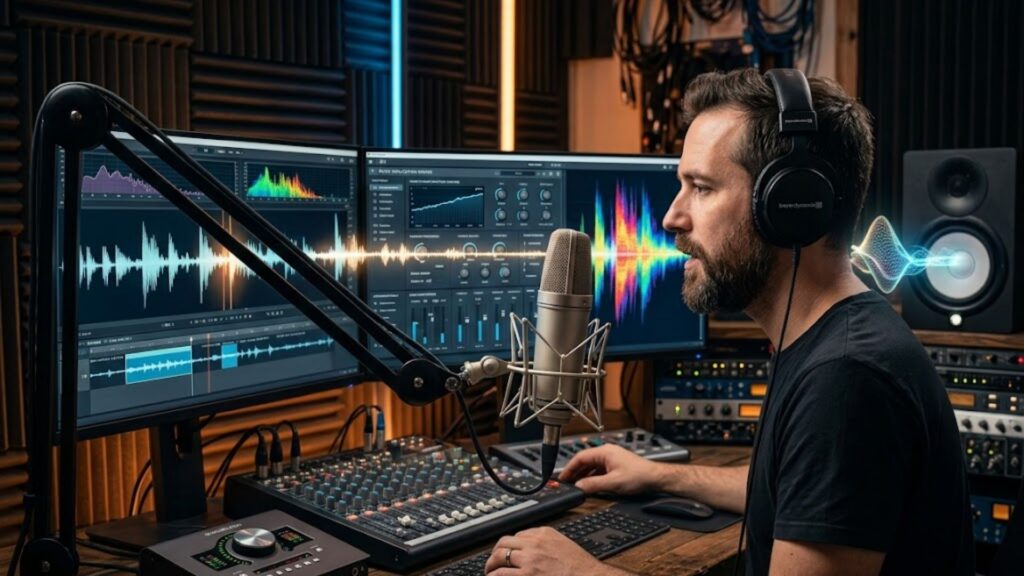
Voice replication is a subset of synthetic audio technology that uses deep-learning algorithms to analyze the unique characteristics of a human voice. The technology breaks down speech into distinct phonetic components, analyzing pitch, modulation, speed, and accent. Through advanced speech synthesis, the software builds a highly detailed mathematical model of the source voice, allowing it to generate entirely new sentences from written text.
This technology is vastly different from the robotic text-to-speech tools of the past. Modern models can capture emotional undertones, natural breathing pauses, and conversational cadences that make the synthetic output virtually indistinguishable from a real human recording. It requires minimal audio input to generate a highly realistic output, making it accessible to businesses of all sizes.
By analyzing the underlying patterns of sound, artificial intelligence can replicate the subtle inflections that make a voice unique. This means that a business executive can record a short script once, and the software can then generate hundreds of hours of high-quality corporate training materials or marketing messages in that exact voice. This process eliminates the physical constraints of the microphone while preserving the human connection that audiences crave.
How to Clone My Voice for Videos: A Step-by-Step Business Guide
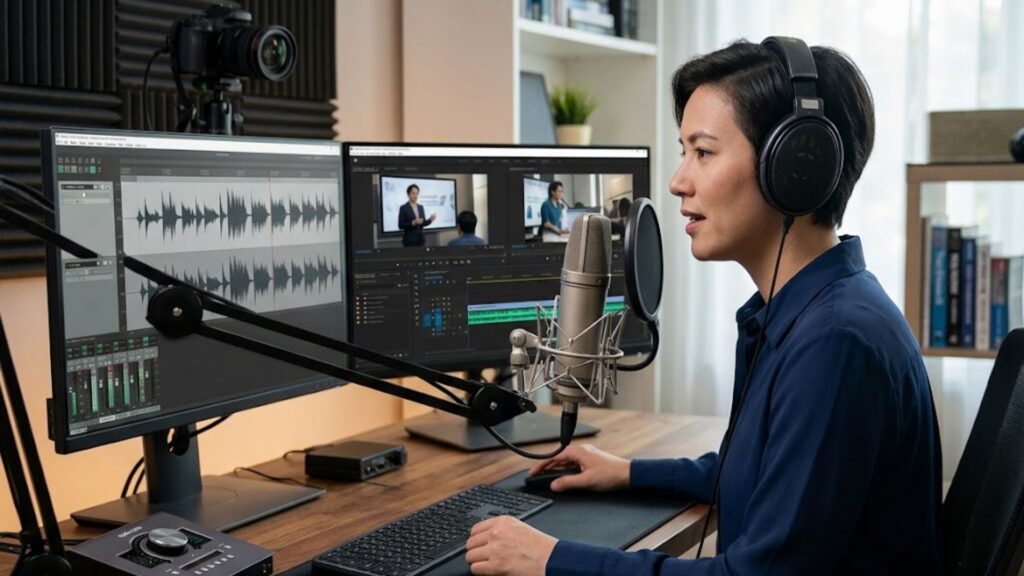
How to clone my voice for videos is a question that many content creators and businesses ask when they realize how much time traditional audio recording consumes. The actual process is straightforward when using modern platforms, but it requires careful attention to detail to achieve studio-grade results. By following a structured approach, you can create a highly realistic digital voice that can be used for all your corporate messaging.
Step 1: Prepare Your Recording Environment
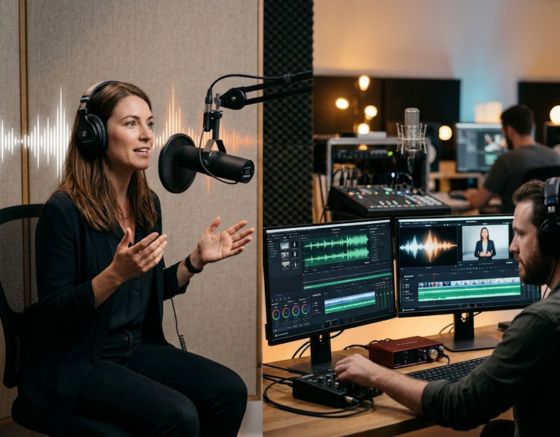
The quality of your final cloned voice depends entirely on the quality of your initial input recording. To get the best results, record your audio in a quiet space with minimal background noise, echo, or interference. Use a high-quality USB or XLR microphone rather than your computer’s built-in microphone.
Step 2: Record a Clear Script
Read a diverse script that covers a wide range of phonemes, emotions, and pacing styles. Speak in your natural conversational voice, maintaining a consistent distance from the microphone. Do not try to sound overly dramatic or clinical; instead, aim for the exact tone you want your brand to project across its video catalog.
Step 3: Upload and Train the Model
Upload your clean audio files into your chosen platform. The advanced AI voice cloning feature from Syllaby AI will analyze your voice and build a custom vocal model in just a few minutes. This model is completely secure and belongs solely to your organization for future content creation.
Step 4: Test and Refine
Once the model is ready, input a sample script to test the voice replication quality. Pay close attention to punctuation, emphasis, and pronunciation of technical terms. Most platforms allow you to adjust the speed, emotional tone, and pauses to ensure the synthetic output sounds completely natural.
Why Brand Consistency Matters in Modern Marketing
To build trust with your audience, you must deliver a consistent experience across every single touchpoint. When a customer hears a different voice every time they watch an explainer video, join a webinar, or listen to a social media clip, it weakens your brand recognition. Utilizing a branded AI voice ensures that your company maintains a singular, recognizable voice across all platforms, regardless of who writes the script or coordinates the campaign.
Consistency in vocal branding builds a sense of familiarity and authority. Just as you maintain strict guidelines for your company logos, color palettes, and fonts, your vocal identity must be guarded and standardized. Utilizing business voice cloning allows you to establish a permanent auditory asset that defines your brand in the marketplace.
When you centralize your voice assets, you protect your business from sudden changes in talent availability. If your main brand ambassador is unavailable or leaves the company, you can continue to release unified, high-quality audio content without missing a beat. This strategic consistency is why forward-thinking enterprises are investing heavily in custom vocal assets to future-proof their marketing efforts.
Scalability: Going from 1 Video a Week to 100
Scaling up video production manually is almost impossible without hiring a massive team of editors, voice actors, and audio engineers. However, by leveraging AI narration, you can turn a single written script into a fully voiced video in seconds. This allows small marketing teams to produce a high volume of videos, from daily social media shorts to extensive product training libraries.
Imagine being able to release personalized video content to different segments of your audience simultaneously. With automated audio generation, you can tailor your scripts to specific industries, regions, or even individual clients without increasing your production budget. This level of customization was once reserved for enterprises with multi-million dollar budgets, but it is now accessible to any agile business.
Furthermore, updating outdated content becomes incredibly easy. If a software feature changes or a company policy is updated, you do not need to discard your old videos and start from scratch. You can simply edit the text script, generate the updated audio segment using your cloned voice, and swap the audio track in your video file. This simple workflow keeps your content library accurate and useful over time.
Comparative Analysis: Human Recording vs. AI Voice Technology
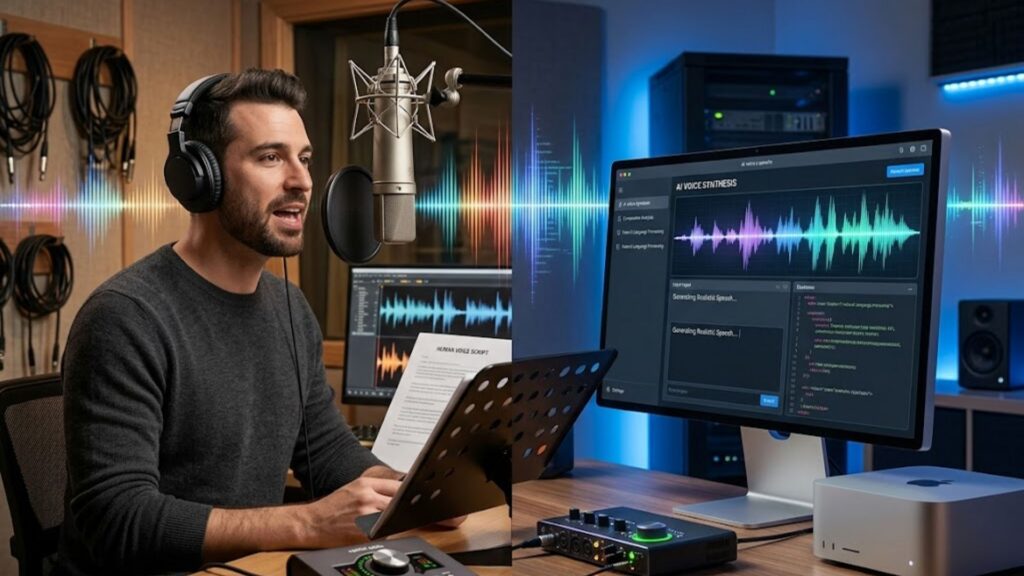
Choosing between traditional voice recording and artificial intelligence solutions depends on your budget, timeline, and production goals. While human actors bring irreplaceable artistic emotion to high-end creative projects, technology offers unmatched speed, cost savings, and operational scalability for daily content needs.
| Feature / Criteria | Traditional Studio Recording | AI Voice Cloning Technology |
| Average Turnaround Time | Days to weeks (scheduling, recording, editing) | Minutes (instant script-to-speech generation) |
| Scalability & Volume | Low (limited by human hours and studio availability) | Infinite (generate hours of audio simultaneously) |
| Cost per Video Hour | High (studio fees, talent rates, editing costs) | Negligible (subscription-based pricing models) |
| Vocal Consistency | Variable (fatigue, illness, talent turnover) | Perfect (identical vocal profile indefinitely) |
| Post-Production Edits | Expensive and time-consuming re-recordings | Instantaneous text updates and quick re-renders |
For businesses that need to produce a steady stream of educational, promotional, and instructional content, the efficiency gains of synthetic audio are undeniable. By utilizing the best voice cloning AI tools available on the market today, companies can redirect their human talent toward high-level strategy and creative direction while letting automated systems handle the routine production work.
Customizing and Refining Your Cloned Voice
To make your synthetic voice sound completely natural, you need to know how to customize its delivery. Modern software allows you to adjust the speed, emotional tone, and punctuation of the output to match your video’s context. A casual social media video requires a faster, more energetic delivery, while a corporate training video demands a slower, authoritative pace.
Most advanced platforms let you add custom pauses, adjust emphasis on specific words, and spell out complex industry terms phonetically to ensure flawless pronunciation. This level of control allows you to shape the voice to match the exact mood of your script. If you want a sentence to sound more conversational, you can add slight pauses or adjust the pitch of key words to mirror natural human speech.
Taking the time to refine these details transforms a standard synthetic voice into an engaging, lifelike narrative partner. By building a library of custom pronunciations and vocal styles, your team can ensure that every generated audio clip meets your brand’s quality standards. This attention to detail is what separates average video content from highly professional, engaging media assets.
Security, Privacy, and Ethical Considerations
As voice replication technology becomes more powerful, security and ethics must remain a top priority for every business. Unauthorized voice replication can lead to brand damage and legal issues, making it essential to use secure platforms that prioritize user consent. When cloning a voice, you must ensure you have the explicit permission of the voice owner and that the digital asset is protected by strong security protocols.
Organizations must implement clear guidelines on who can access and generate audio using their custom digital voices. Treat your company’s cloned voice with the same level of security as your financial data or proprietary software code. This includes utilizing secure user accounts, keeping detailed logs of generated content, and working with trustworthy platforms that do not use your voice data to train public models.
If you have questions about data safety or wish to discuss custom enterprise security options for your company’s audio assets, you can reach out to our support team for personalized guidance. Securing your digital voice model ensures that your brand identity remains secure and is used only for approved, authentic corporate communication.
Integration of Voice Cloning in Multi-Channel Strategies
A successful modern marketing strategy requires a presence across multiple platforms, including social media, websites, email campaigns, and podcasts. Utilizing a unified voice across these channels creates a cohesive experience that strengthens brand recall. With synthetic audio, you can easily repurpose a single blog post into an interactive podcast episode, a YouTube video script, and multiple short-form social media clips.
This multi-channel approach allows you to reach different segments of your audience based on their preferred media consumption habits. For example, some users prefer reading articles, while others would rather listen to an audio version while commuting. By automatically generating audio versions of your written content using your brand’s unique voice, you make your information accessible to everyone without extra effort.
This seamless repurposing of content saves hours of manual work and ensures your messaging remains consistent across all platforms. It also allows you to run localized campaigns in different regions or languages while keeping the core characteristics of your brand’s voice intact. This global scalability is key to growing your brand in competitive international markets.
The Future of Video Production and Synthetic Media
The landscape of video production is evolving rapidly, with synthetic media leading the way. As voice replication and video generation technologies continue to improve, the barrier to entry for high-quality video creation will disappear. Businesses that adopt these tools early will enjoy a massive competitive advantage, allowing them to produce content faster and more efficiently than their competitors.
We are moving toward a future where entire video campaigns can be generated, updated, and localized in real time based on audience performance data. In this fast-paced environment, static production methods will simply not be able to keep up with the speed of digital media. Investing in digital voice assets today prepares your business for the automated marketing ecosystems of tomorrow.
By combining AI-driven scripts, automated voiceovers, and advanced video editing tools, your team can focus on big-picture creative concepts and strategic goals rather than tedious production tasks. To begin transforming your video production workflow and experience these benefits firsthand, consider creating a free account on our platform today to see how easy it is to scale your content output.
Frequently Asked Questions
Is voice cloning legal for commercial business use?
Yes, cloning a voice is completely legal for commercial use, provided you have the explicit consent and written authorization of the person whose voice is being replicated. It is crucial to use reputable platforms that enforce strict security measures to protect your custom vocal models from unauthorized use or distribution.
How much audio data is needed to clone a high-quality voice?
While some platforms can create a basic voice clone with just a few minutes of audio, providing 10 to 30 minutes of high-quality, studio-grade recording yields far more natural results. A longer, diverse recording helps the artificial intelligence model learn the subtle nuances, inflections, and emotional ranges of your voice.
Can a cloned voice speak multiple languages?
Yes, many advanced synthetic voice platforms can take a cloned voice model trained in English and make it speak other languages like Spanish, French, or German. The software retains your unique vocal characteristics and tone while adapting your speech to the correct pronunciation and accent of the target language.
How do you make a cloned voice sound less robotic and more human?
To make your digital voice sound as natural as possible, focus on providing a clean, clear, and high-quality input recording with no background noise. Additionally, use the platform’s editor to adjust sentence pacing, add natural breathing pauses, and fine-tune word emphasis to match conversational speech.
What industries benefit the most from voice cloning?
Industries that require a high volume of consistent, educational, or promotional content benefit the most. This includes e-learning platforms, financial institutions, software companies with extensive product video libraries, and digital marketing agencies looking to scale their social media video output without increasing costs.
Embracing the Future of Content Creation
Unlocking the full potential of your brand’s marketing strategy requires embracing tools that remove the operational friction of traditional media production. Learning how to clone my voice for videos is no longer a futuristic dream, but an immediate operational asset for any forward-looking business looking to build trust, authority, and engagement at scale.