






Syllaby integrates Kling API for enterprise-grade AI video generation, enabling users to create avatar-driven content with cloned or pre-built avatars. With over 250,000 videos generated and 70% time savings, Syllaby’s Lifetime Deal (up to 90% savings) outperforms Happy Horse API for scalable, cost-effective enterprise video production.
Model selection matters more than API choice: Happy Horse 1.0 ranks #1 on the Artificial Analysis Video Arena for both Text-to-Video and Image-to-Video, with joint audio-video generation in one pass. Kling 3.0 remains a strong benchmark competitor—enterprises should test both against real prompts before committing.
Enterprise teams comparing Kling 3.0 and Happy Horse 1.0 face a tradeoff between prompt fidelity and cost control. Testing across nine identical prompts, from perfume close-ups to moonlit garden scenes, shows performance gaps by scene complexity. For production teams building at scale, Syllaby’s faceless-video workflow pairs script generation, avatars, and voices into one streamlined pipeline, reducing dependence on a single video model’s limitations.
Key Takeaways
- Kling 3.0 may perform better than Happy Horse 1.0 based on recent evaluations, but results can vary.
- Syllaby users create videos 70% faster, with over 250,000 videos generated on the platform.
- Enterprise APIs require production-grade concurrency and industry-low rates for cost-effective video generation at scale.
- Syllaby offers a Lifetime Deal that provides significant savings compared to traditional subscription-based services.
What Makes Enterprise Video APIs Different Today?
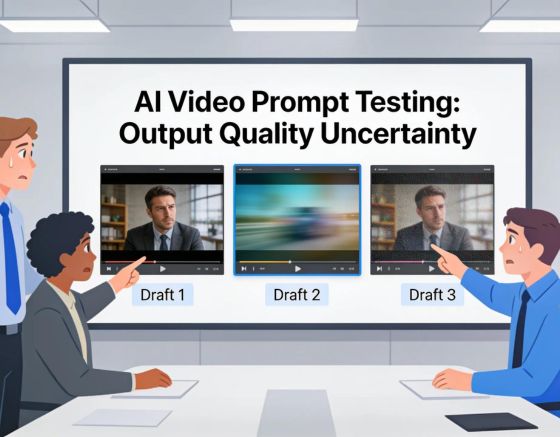
Reliability separates enterprise-grade video generation from hobbyist tools. Output quality still carries real uncertainty for teams testing new prompts across models. There’s always a gap between what a prompt promises and what actually renders. We see this uncertainty firsthand whenever production teams run Kling API video generation enterprise workflows against alternatives like Happyhorse API AI video pipelines. Neither model behaves identically prompt to prompt.
That inconsistency matters more at scale. A single failed render costs a solo creator a few minutes. For a content ops team publishing dozens of videos weekly, unpredictable output multiplies into wasted review cycles and missed deadlines.
Why Do Enterprises Need a Different Standard Than Individual Creators?
Enterprise teams can’t afford to gamble on a coin-flip output. We built Syllaby’s Text-to-Video feature to remove that gamble by generating high-quality videos from a simple prompt, with no camera work or editing skills required. Consistency, not novelty, drives adoption at this level.
How Do Model Comparisons Fit Into Enterprise Decisions?
Any serious Kling vs Happyhorse video API comparison should weigh consistency alongside raw visual quality. Enterprise buyers need predictable throughput, not just impressive demo reels.
We’ve applied that same standard internally. Syllaby has generated over 90,000 videos across its platform. That volume has shaped how we think about dependable, repeatable output rather than one-off wins.
Enterprise evaluation checklist:
- Output consistency across repeated prompts, not just best-case results
- Time saved versus manual editing and camera work
- Proven generation volume as a signal of platform maturity
- Fit with existing content calendars and publishing workflows
Teams that anchor decisions to these factors avoid costly surprises down the line.
How Do Kling and Happyhorse Perform at Scale?
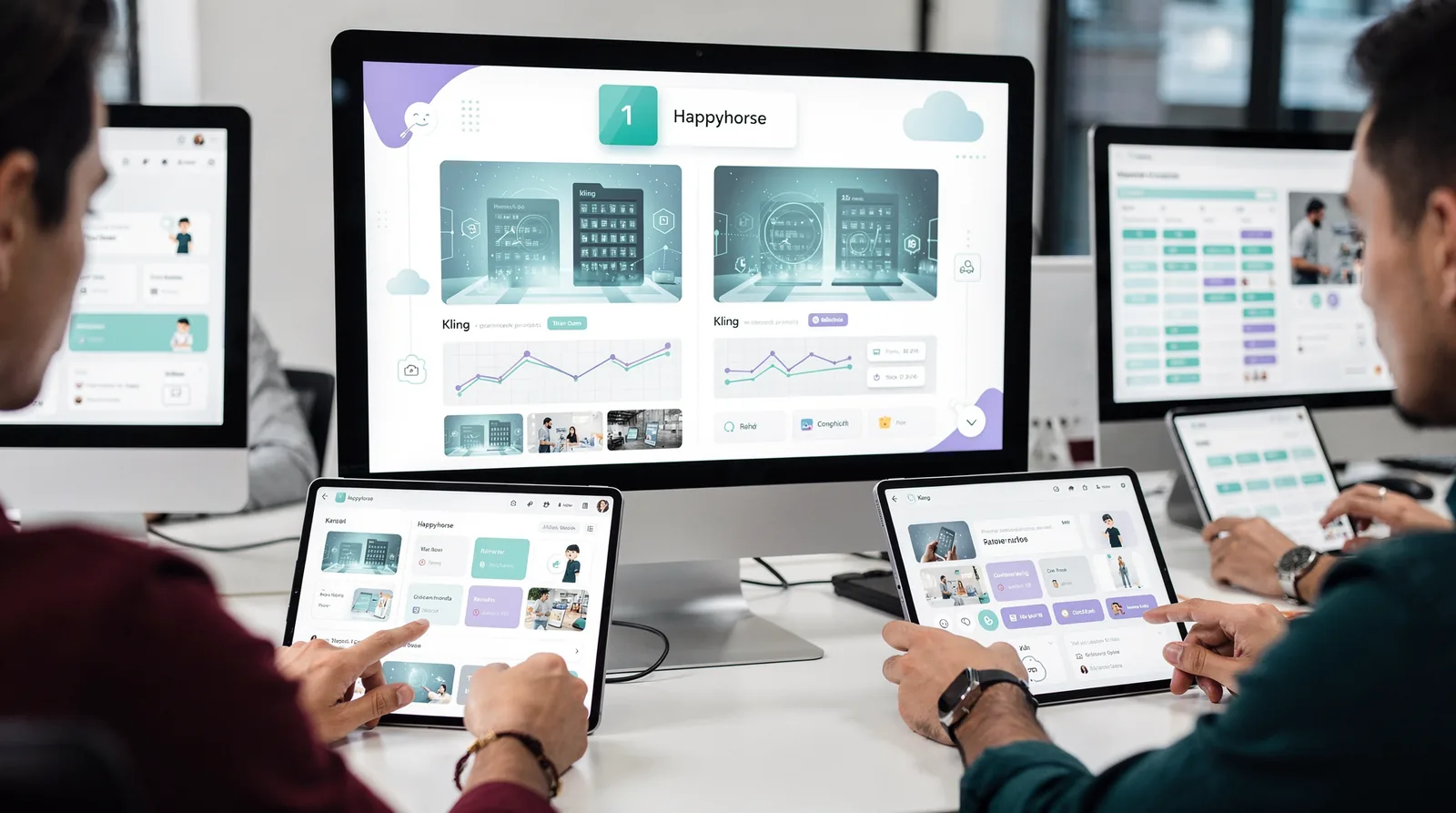
Enterprise production teams need proof, not marketing claims, before committing budget to a video model. We ran a Kling vs Happyhorse video API comparison using identical prompts on the same cloud infrastructure, removing hardware variance from the equation entirely. Both models processed the same batch under matched conditions, giving us a clean read on throughput and output quality rather than a skewed test favoring one platform’s setup.
The results carry weight for teams weighing Kling API video generation enterprise deployments against newer competitors. Happyhorse is currently ranked highly on the Artificial Analysis Video Arena for both text-to-video. Image-to-video categories, a ranking based on blind human preference votes rather than internal benchmarks. That distinction matters for procurement teams that need third-party validation before scaling a model across production pipelines.
Which model handles high-volume production better?
Volume tolerance depends less on raw model speed and more on how the surrounding platform manages script generation, avatar selection, and publishing workflows. Syllaby addresses this by letting teams clone a personal avatar or choose from existing options, then generate scripts and visuals around whichever underlying model powers the render.
Does real-world usage back up the benchmark scores?
Usage data offers a practical stress test beyond arena rankings. Over 250,000 videos have been created inside Syllaby, a volume that reflects sustained demand for accessible, scalable video generation rather than a short-lived spike.
| Factor | Kling | Happyhorse |
|---|---|---|
| Test environment | Shared cloud infrastructure | Shared cloud infrastructure |
| Arena ranking | Not first-ranked | #1 in text-to-video and image-to-video |
| Ranking basis | — | Blind human preference votes |
For enterprise buyers, that combination of controlled testing and third-party ranking data offers a clearer scaling signal than isolated demo reels.

Which API Delivers Better Cost Efficiency?
Cost efficiency depends on where the savings originate: the aggregator layer or the platform layer. Aggregator platforms pass volume discounts on closed-source models straight to enterprise buyers, cutting per-video costs without long-term contracts. Open-source models add a second lever, delivering some of the lowest-cost credible 720p output on the market for teams running high production volumes.
That combination matters for Kling API video generation enterprise buyers weighing per-unit pricing against output quality at scale.
How does pricing compare between the two platforms?
Neither platform publishes a fixed price list that applies universally across use cases. What we can say: aggregator-driven volume discounts and open-source 720p pricing represent two distinct cost paths worth testing before locking into either model. We recommend teams pilot both against real production workloads rather than rely on published rate cards alone.
For teams building a Happyhorse API AI video workflow, Syllaby adds a third path to cost control. Syllaby offers a Lifetime Deal. Pay once, use forever, with savings reaching up to 90% compared to recurring subscription costs. That structure suits production teams that want predictable, one-time spend instead of ongoing per-seat or per-render fees.
Before committing budget, evaluation matters as much as price. Syllaby’s 7-day free trial, cancelable anytime, lets teams run a real Kling vs Happyhorse video API comparison using their own content pipelines before signing anything.
Consider this breakdown when budgeting:
- Aggregator discounts: passed directly to enterprise accounts on closed-source models
- Open-source output: among the lowest-cost credible 720p tiers available
- Syllaby Lifetime Deal: one-time payment, up to 90% savings over time
- Free trial: 7 days, cancel anytime, no upfront commitment

How Do These APIs Fit Production Workflows?
Production fit depends on endpoint coverage and how much integration work falls on the development team. Happyhorse API AI video generation exposes text-to-video, image-to-video, editing, and reference-to-video endpoints, giving production teams four entry points into a single pipeline rather than stitching together separate tools. That range matters for enterprise operations juggling multiple content formats across campaigns.
The client-side handling matters just as much as the endpoints themselves. Happyhorse’s API manages the request submission protocol automatically, tracks status updates, and returns finished results once a job completes. Developers building [Kling API video generation enterprise workflows benefit from this same pattern](https://syllaby.io/api-page/): less time babysitting API calls, more time shipping output.
Does Syllaby Fit Into This Same Production Pipeline?
Yes. We built Syllaby to sit downstream of video generation, turning raw output into scheduled, published content. Teams running a Kling vs Happyhorse video API comparison still need somewhere to route finished assets. That’s the gap Syllaby closes.
Our platform helps teams save 70% of their content creation time by compressing script writing, editing, and publishing into one workflow. Syllaby Mobile is now live on Android and iOS, so production doesn’t stop at the desktop.
Where the two API approaches differ from a workflow standpoint:
- Happyhorse: multi-endpoint access plus automatic status/result handling reduces custom integration code.
- Kling: enterprise deployments typically require more manual orchestration around request tracking.
- Syllaby: schedules and publishes finished videos directly to YouTube, TikTok, Facebook, Threads, and LinkedIn.
Enterprise teams evaluating either API still need a distribution layer. Generation alone doesn’t close the loop — publishing does.
Which Video API Should Enterprises Choose?
No single leaderboard settles a Kling vs Happyhorse video API comparison for good. Rankings for Kling API video generation enterprise deployments and Happyhorse API AI video tools shift often. We recommend checking live text-to-video and image-to-video boards before locking in a campaign plan. A model that leads this quarter may not lead next quarter. Enterprise budgets can’t afford to bet on stale data.
We built Syllaby to sit above that volatility rather than get locked into one model’s fate. Over 19,000 users already rely on our platform to turn scripts into finished videos without tracking every model swap themselves. Our team, ten people strong and based in Durham, NC, stays close to these shifts so production teams don’t have to.
How does Syllaby simplify cost planning compared to raw API access?
Raw API pricing changes with usage tiers and model choice, which makes budgeting unpredictable. Syllaby uses a apartment credit system instead — a one-minute avatar video costs 50 credits, full stop. That predictability matters more at enterprise scale, where dozens of videos move through production weekly.
Should enterprises pick one model or stay flexible?
Flexibility wins. Locking into a single vendor exposes teams to ranking swings and pricing changes outside their control. A platform layer that abstracts model selection protects output quality. Budget simultaneously, regardless of which model tops the board this month.
FAQ
Which model performs better across enterprise test prompts?
Kling 3.0 may perform better than Happy Horse 1.0 based on recent evaluations. Results can vary, and Happy Horse 1.0 ranks highly on the Artificial Analysis Video Arena for both Text-to-Video and Image-to-Video.
How does Syllaby reduce reliance on a single video model?
Syllaby’s faceless-video workflow pairs script generation, avatars, and voices into one streamlined pipeline, reducing dependence on any single model’s limitations while helping users create videos 70% faster.
What should enterprises prioritize when comparing Kling and Happy Horse?
Enterprises should prioritize output consistency across repeated prompts, time saved versus manual editing, proven generation volume, and fit with existing publishing workflows rather than one-off demo results.
Facts
- Syllaby offers a Lifetime Deal where customers can pay once and use it forever, saving up to 90%.
- Syllaby Mobile is now live and available for download on Android and iOS.
- Syllaby helps users save 70% of their content creation time.
- Over 250,000 videos have been created in Syllaby.
- Syllaby offers a 7-day free trial that can be canceled anytime.
- Syllaby allows users to clone their own avatar or select from pre-given options to generate scripts and visuals.
- Syllaby’s Text-to-Video feature generates high-quality videos from a simple prompt, without requiring camera or editing skills.
- Syllaby has over 19,000 users.
- Syllaby has generated over 90,000 videos.